Lothar Fritz Freie
1955–1982
Lothar Fritz Freie, a 27-year-old from Lower Saxony living in West Berlin, entered East Berlin territory near the Helmut-Just Bridge on 4 June 1982. Shot while leaving as he had been told to, he died of his wounds on 6 June.

Lothar Fritz Freie was born on 8 February 1955 in Grossburgwedel in Lower Saxony. After finishing school in 1977 he moved to West Berlin with a school friend, intending to study law, but for reasons that are not known he gave up after four semesters. His official address was his friend's flat, where he turned up only now and then.
For the next few years he struggled in the divided city, without work or money. He was in serious difficulties but did not take his school friend's advice; the friend eventually offered him a meal at least once a week. On one of his visits he said he did not know how he could go on living like this. He no longer had an identity card. When he asked his friend to somehow take him home to West Germany, the friend refused; without an identity card this was hardly possible from West Berlin, and it would have been a very risky favour.
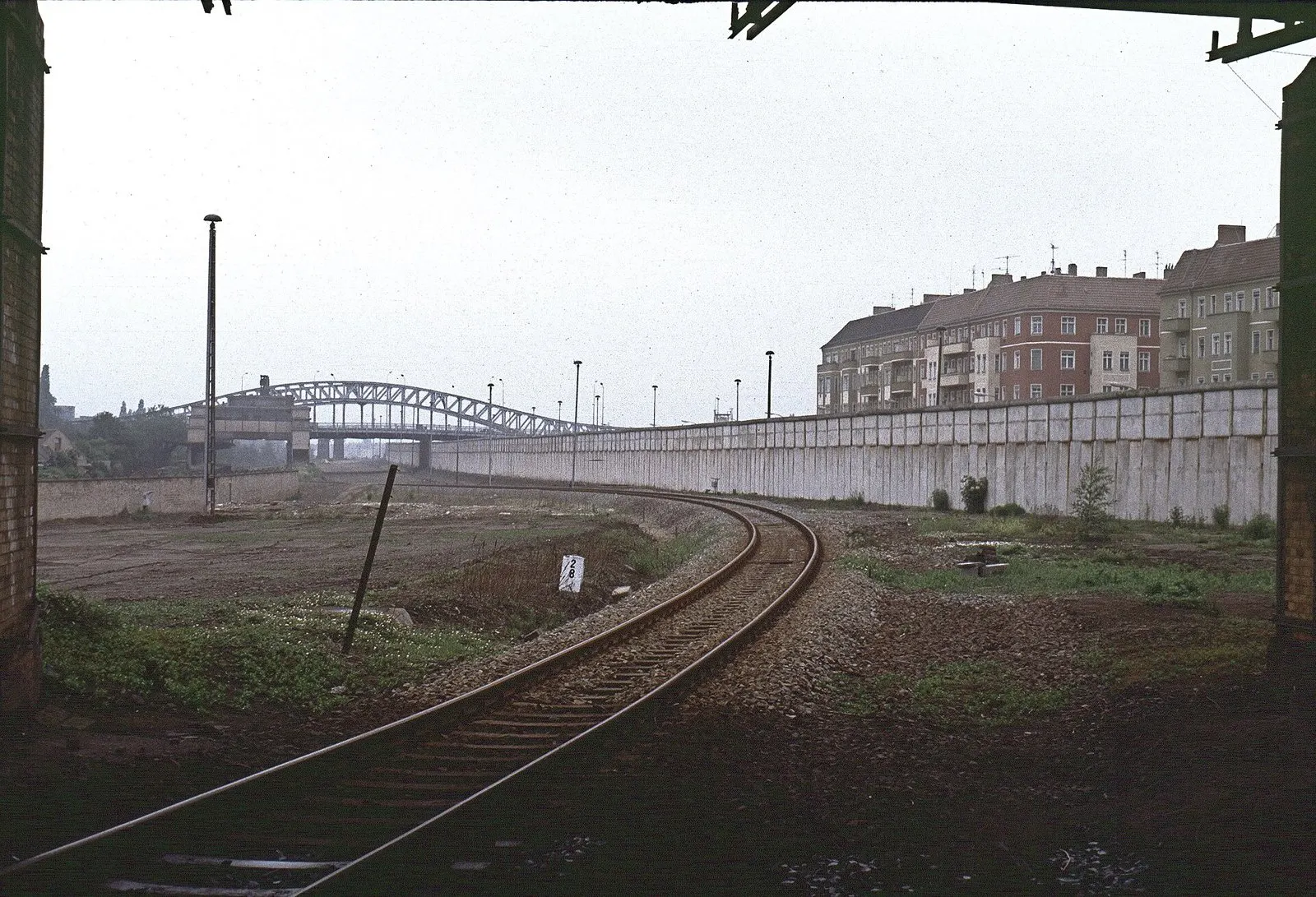
The night of 4 June 1982 was warm and clear, with a nearly full moon. At about 11 p.m. he entered the East Berlin border territory from West Berlin, bare-chested and holding his pullover, and walked north under the Helmut-Just Bridge along the "Allied track", a rarely used line serving the French garrison that ran through an overgrown railway wasteland near the disused Bornholmer Strasse S-Bahn station. What he intended is still unclear; later investigations found nothing to suggest he meant to take his own life.
Near the Böse Bridge two guards were sent to expel him, and from about 30 metres they told him, as a citizen of West Berlin, to leave East German territory. According to the guards, he mumbled something they could not understand, turned, and walked quickly back the way he had come. A few metres to the left he could have crossed into West Berlin, but he probably did not realise it. Meanwhile two guards from the tower at the Helmut-Just Bridge, unaware he had just been told to leave, had been ordered to arrest him. They called on him to stop, and he began to run. One guard fired a warning shot; when he kept running, the guard, who had stumbled and fallen to his knees, fired two aimed bursts at him, and he collapsed on the track.
He told the guards weakly to leave him or shoot him. They dragged him out of sight of the West, then gave first aid; in shock, he said he had wanted to put up a tent. After two emergency operations he died at the People's Police Hospital in the early hours of 6 June from a gunshot wound through the side of his pelvis. He was not drunk; no test was made for other substances. Even under East German law, firing on a West Berliner who was clearly obeying an order to leave was illegal, yet both soldiers were commended and quickly transferred, never learning that he had died.
The West German government, the West Berlin Senate and the French city commander, speaking also for his British and US counterparts, protested strongly. An East German official claimed to the Senate that a West Berliner had insulted and assaulted border soldiers and been arrested, without mentioning that he had died. The Stasi held his body for weeks, had it cremated on 24 August 1982 at Baumschulenweg, and five weeks later his urn was buried secretly in the cemetery's communal urn grounds. Only then did the West German Permanent Mission learn of it. In late 1993 the Berlin Regional Court gave the soldier who fired, 20 at the time, a suspended two-year youth sentence for manslaughter, and in 1995 his guard leader was convicted as a co-perpetrator and given a suspended prison sentence.
Sources
This profile is a summary written for this site. Every fact in it is taken from source 1, which also gives the full account with archival references.
- Martin Ahrends/Udo Baron/Hans-Hermann Hertle, “Lothar Fritz Freie”, biography in Chronik der Mauer, Federal Agency for Civic Education, Centre for Contemporary History Potsdam and Deutschlandradio. Accessed 23 September 2026. Read online. Basis for every fact in this profile, including the dates and place of death.
- German version of the same biography. Accessed 23 September 2026. Read online.
- Hans-Hermann Hertle and Maria Nooke (eds.), The Victims at the Berlin Wall, 1961–1989: A Biographical Handbook. Centre for Contemporary History Potsdam and Berlin Wall Foundation, Berlin 2011. The printed handbook from which the online biography is taken.
- Hans-Hermann Hertle and Maria Nooke, “140 Victims at the Berlin Wall, 1961–1989” (list), Centre for Contemporary History Potsdam and Berlin Wall Foundation, August 2017. PDF. Used to cross-check names and dates.
- Hans-Hermann Hertle and Maria Nooke, “The Victims at the Berlin Wall, 1961–1989: Findings of a Research Project”, August 2017. PDF. Source of the classification into escapees, people with no intent to escape, and border soldiers.
Further reading
Image credits
- The railway grounds beside the Berlin Wall, looking towards the Böse Bridge and Bornholmer Straße station, photographed on 8 June 1988. On 4 June 1982 Lothar Fritz Freie was shot on these grounds, near the Helmut-Just Bridge, and died of his wounds two days later.. Roehrensee, CC BY-SA 4.0, Wikimedia Commons.
Cite this page
“Lothar Fritz Freie”, Victims of the Berlin Wall, Berlin Experiences. https://victimsofthewall.com/victims/freie-lothar-fritz/
Map
The pin position is based on the place of death described in source 1. Base map © OpenStreetMap contributors; course of the Wall in 1989 from Geoportal Berlin (dl-de/zero-2.0). Accessed 23 September 2026.