About this site
This site remembers the people who lost their lives at the Berlin Wall between its construction on 13 August 1961 and its opening on 9 November 1989. It tells who they were, what happened to them, and where it happened, so that they are remembered as people and not only as numbers.
A Berlin Experiences project

Who is remembered here
The site follows the research project The Victims at the Berlin Wall, 1961–1989, carried out by the Centre for Contemporary History Potsdam (ZZF) and the Berlin Wall Foundation. Its biographical handbook was edited by Hans-Hermann Hertle and Maria Nooke. Before this research, estimates of the number of deaths ranged from 78 to more than 200, and many victims' names and stories were unknown.
The researchers examined 576 deaths and suspected cases. They counted someone as a victim of the Wall if their death was connected either with an escape attempt, or in time and place with the border regime. On that basis they identified at least 140 victims:
- 101 people who tried to escape and were shot, had fatal accidents or took their own lives when their escape failed;
- 30 people from East and West with no intention of escaping, and one Soviet soldier, who were shot or had fatal accidents;
- 8 East German border soldiers who were killed on duty.
The study also found that at least 251 travellers, mostly elderly, died before, during or after passing through Berlin border checkpoints, most of them from heart attacks. These deaths are not included on this site, in line with the study, because their connection with the border regime cannot be established case by case. Other cases could not be resolved because the records were not sufficient.
Where the information comes from
Every fact on this site comes from the biographies published by the research project on Chronik der Mauer, a joint website of the Federal Agency for Civic Education, the Centre for Contemporary History Potsdam and Deutschlandradio, and from the project's published findings (August 2017). The biographies are based on public prosecutors' files, Stasi records, military archives, police records and, in more than 70 cases, conversations with the families and friends of the victims.
The profiles here are shorter summaries written for this site. They do not replace the original biographies, which contain the full account and references. Each profile links to its source, and to Wikipedia articles where a matching article exists.
How the facts were checked
Names, dates of birth and death, and places are taken directly from the source biographies rather than retyped. They were then compared with the project's official list of the 140 victims, and the totals by year, by cause of death and by place were checked against the figures published in the study.
Each profile was written from its source biography alone and then checked three more times by separate reviewers: first sentence by sentence, then claim by claim, and finally for precision in wording such as legal terms, dates and places. Every date and number was also checked automatically against the source. Every correction is logged. Where the source is uncertain, for example about a date or about how someone died, the profile says so, and where a source contradicts itself, the profile does not state the disputed detail as fact.
Where sources disagree, the biography on Chronik der Mauer is followed. For example, the 2017 list gives Hans Räwel's year of birth as 1942, while his biography gives 11 December 1941; the biography is used.
About the map
Pins mark the place where each person was fatally injured, based on the description in their biography: a street, a bridge, a stretch of river or canal. Many positions are approximate, and each profile says how precise its pin is. Where several people died close together, pins are grouped; zoom in or select a group to see them.
The line on the map shows the course of the Wall in 1989 (dashed where the border ran along a waterway or otherwise differed from the Wall), from the Berlin Senate's open data (licence dl-de/zero-2.0). The base map shows Berlin today and is based on OpenStreetMap data.
Reusing the data
The victim records behind this site, including the summaries written for it, are available as JSON and as plain text under the CC BY 4.0 licence: you may reuse them if you credit this site. The licence does not cover the photographs, which keep their own licences, or the original biographies on Chronik der Mauer.
About the images
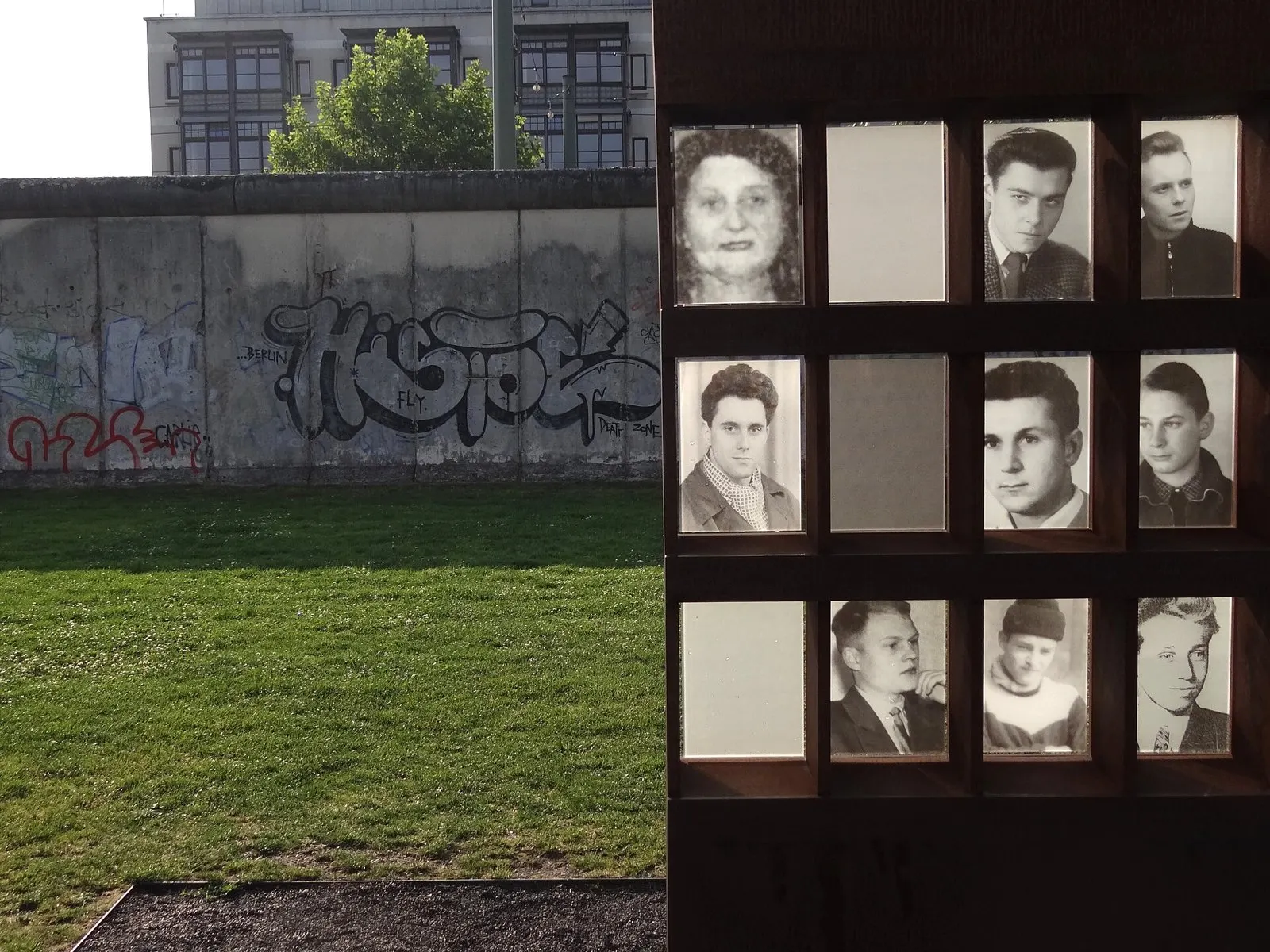
All photographs on this site come from Wikimedia Commons and are used under free licences. Most show the memorials to the victims: memorial columns, crosses, stones and the Window of Remembrance. Some portraits of victims are photographs of the pictures displayed on these memorials. Each image was checked by two reviewers for its licence, for whether it really shows the person or their memorial, and for respect: no image shows a body or an injury.
Many other portraits of the victims belong to families, archives or press agencies and cannot be reused freely, so they are not shown here. Where no freely licensed image exists, the site shows the person's name only. Photographers and licences are listed on each profile and on the image credits page.
Visiting the places of remembrance
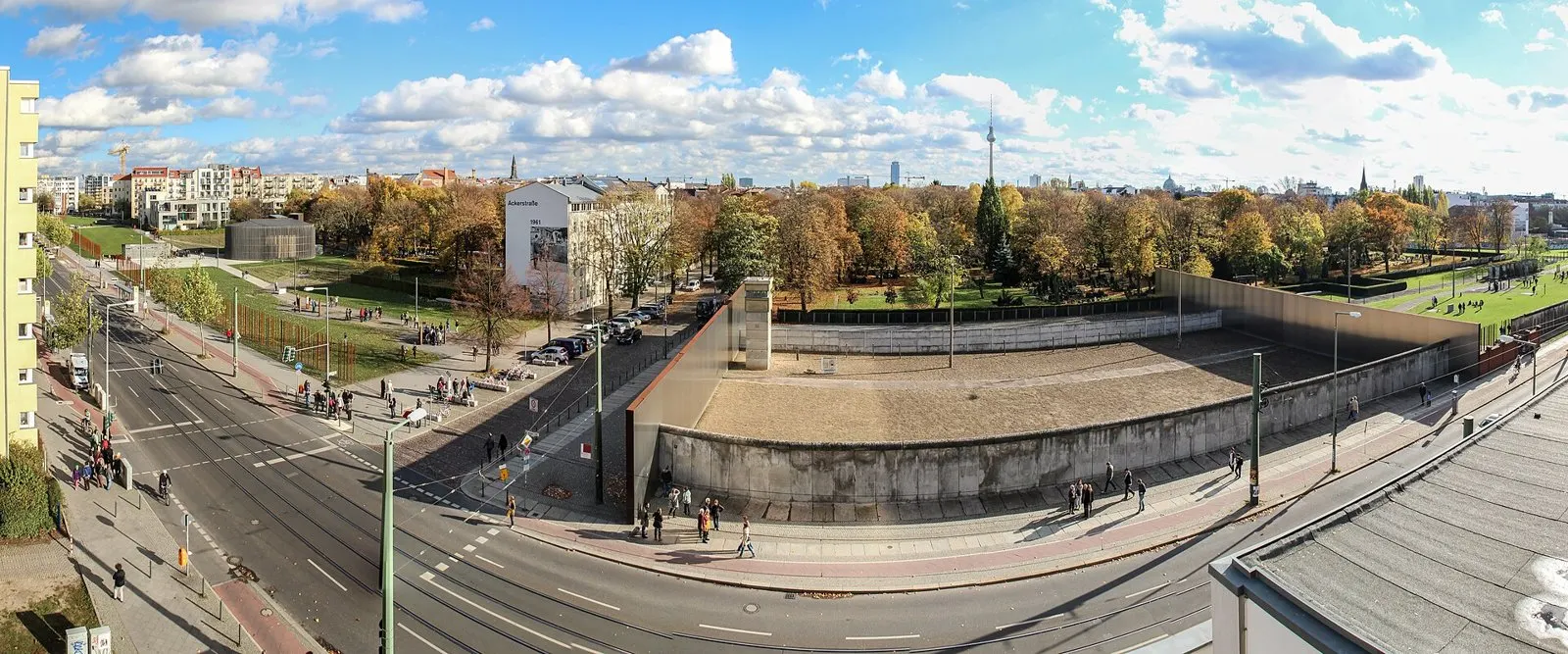
The Berlin Wall Memorial on Bernauer Strasse preserves a section of the border strip and includes the Window of Remembrance, which commemorates the people who died at the Wall. Many of the people on this site are also commemorated by memorial stones, crosses and plaques close to where they died.
Berlin Experiences, which publishes this site, also leads a one-hour guided walk along the Berlin Wall at Bernauer Strasse for visitors who want to see the memorial with a historian.

Who publishes this site
This site is published by Berlin Experiences, a Berlin history and tours company founded by the historian Matt Robinson. You can read more about Matt Robinson and Berlin Experiences.
Corrections
If you find an error, or you are a relative and would like something changed, please email info@berlinexperiences.com. Every correction is checked against the historical sources.