Dietmar Schwietzer
1958–1977
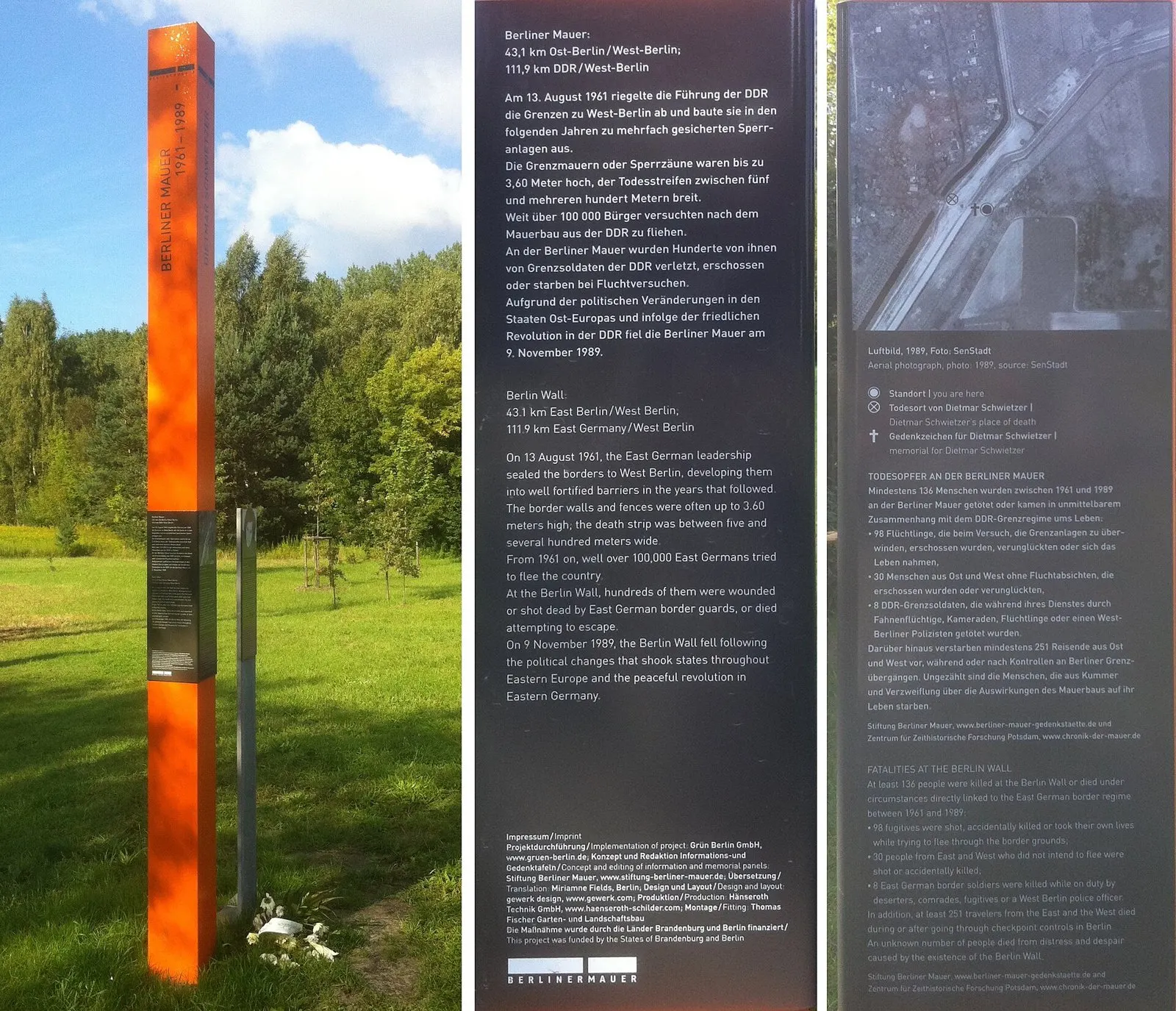
Dietmar Schwietzer, an 18-year-old newly qualified communications worker and radio enthusiast from Magdeburg, was shot dead by border soldiers on 16 February 1977 near Berliner Allee, between Schönwalde and Spandau, a few metres short of the Wall.
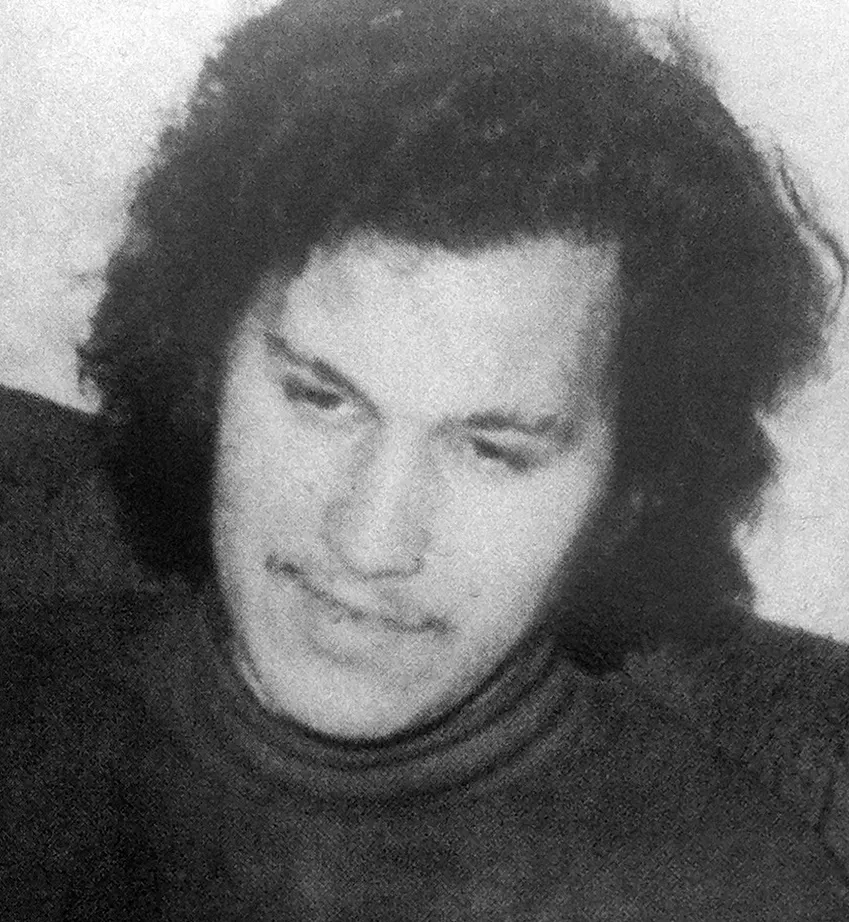

Dietmar Schwietzer was born on 21 February 1958 in Magdeburg and grew up with his parents and a sister. Radios fascinated him from childhood: he mended sets for friends and neighbours and built his own station, which could not transmit but could listen in to international amateur radio. Through the radio section of the pre-military Society for Sport and Technology he was able to transmit, and the international radio network became his private world; neither his parents nor his teachers knew of his contacts.
After the 10th grade he trained as a communications worker at the German postal service's district office in Magdeburg. Less interested in discos than other apprentices, he spent his time with his equipment. Because he seemed so well adjusted, and because the Stasi saw a use for him as a communications specialist, he was chosen for the Stasi's "Felix Dzierzynski" guard regiment, where he was to start as a radio operator on 1 April 1977.
On 15 February 1977 he received his trade certificate and proudly showed it to his father, then left for a party at the "International" hotel in Magdeburg, where he stayed only briefly and drank a glass of cola. No one knew what he intended. Thirty years later his parents still wondered whether he was trying to leave everything behind after his girlfriend's sudden death earlier that year, or to escape recruitment by the Stasi. He set off on his motorcycle with his documents, his savings and 110 West marks from his grandparents in West Germany, rode about 100 kilometres in near-freezing cold to Hennigsdorf and continued by bus.
He crossed the Niederneuendorfer Canal from Schönwalde and, early on 16 February, crept across a field to the border. After watching for a long time through binoculars, he went through the inner fence and a dog run, and shortly after 7 a.m. set off an alarm at the signal fence. According to a Stasi report written the same day, a warning shot was then fired from a watchtower. As he ran towards the Wall, 30 metres away, four soldiers in two watchtowers fired 91 shots. Three bullets struck him a few metres from the Wall; a shot to the back of his head killed him. The guards pulled him into the anti-vehicle trench, out of sight of the West. The border troops later used his case in training as a good example, criticising only the amount of ammunition used.
He was buried at the Neustädter Cemetery on 23 February under Stasi observation. His parents protested at the highest level: on 10 April 1977 his father sent the funeral bill to Erich Honecker and demanded that his son's killer pay it. The family was then kept under constant surveillance, questioned many times and threatened with prosecution if news of the death reached the West. Two months later the Stasi paid the bill of 383.40 marks, at first intending this only as a temporary measure, but in the end it did not reclaim the sum from the family.
In mid-December 1989 his parents wrote to the East German prosecutor general, asking for the death to be investigated and for compensation; in mid-1990 the military prosecutor's office arranged for them to be paid the second half of his life insurance, which had been withheld, but their wider claim for compensation came to nothing. One of the four soldiers had died; on 29 November 1995 the Potsdam Regional Court gave the other three suspended youth sentences of one year and three months each for joint manslaughter. At the time each had received a badge for exemplary border service and a bonus of 150 marks; none of them, they credibly told the court, had been proud of it.


Also died on the outer ring between Berlin-Spandau and Schönwalde
- Ulrich Steinhauer 4 November 1980
Sources
This profile is a summary written for this site from the biography in source 1, which also gives the full account with archival references. Facts taken from other sources are listed below with what they support.
- Martin Ahrends/Udo Baron/Hans-Hermann Hertle, “Dietmar Schwietzer”, biography in Chronik der Mauer, Federal Agency for Civic Education, Centre for Contemporary History Potsdam and Deutschlandradio. Accessed 23 September 2026. Read online. The biography from which this profile was written, and the source of the dates and place of death.
- German version of the same biography. Accessed 23 September 2026. Read online.
- MfS Hauptabteilung IX/7, report on the state of the investigation into the attempted border breach with fatal outcome on 16 February 1977, 16 February 1977 (BStU, MfS, AS 420/80, Bd. 1, Bl. 273–277), transcript in Chronik der Mauer. Accessed 5 October 2026. Read online. Source for: his birth, training and planned service in the Stasi guard regiment, his amateur radio work, the time and place of the shooting, the 91 shots, what he carried, that the Stasi's inquiries found no sign of his plan, and the Stasi's plan to watch his funeral.
- Hans-Hermann Hertle and Maria Nooke (eds.), The Victims at the Berlin Wall, 1961–1989: A Biographical Handbook. Centre for Contemporary History Potsdam and Berlin Wall Foundation, Berlin 2011. The printed handbook from which the online biography is taken.
- Hans-Hermann Hertle and Maria Nooke, “140 Victims at the Berlin Wall, 1961–1989” (list), Centre for Contemporary History Potsdam and Berlin Wall Foundation, August 2017. PDF. Used to cross-check names and dates.
- Hans-Hermann Hertle and Maria Nooke, “The Victims at the Berlin Wall, 1961–1989: Findings of a Research Project”, August 2017. PDF. Source of the classification into escapees, people with no intent to escape, and border soldiers.
Corrections
This profile was corrected on 24 and 28 September and 3 and 5 October 2026. Each round of corrections is described in the corrections log:
-
: Court outcomes checked against the German originals
- Corrected the verdict: the Potsdam Regional Court (not district court) gave the other three youth sentences of one year and three months each for joint manslaughter, suspended on probation, not “commuted to probation”.
- : All profiles and articles cross-checked against the German originals
- : Every profile checked against all the sources
- : Independent sources added for the other 88 profiles
Further reading
Image credits
- Dietmar Schwietzer, photographed from the portrait on his memorial column at Schönwalde-Glien (cropped from a photo of the column). Violetriga, CC BY-SA 3.0, Wikimedia Commons.
- Memorial stele for Dietmar Schwietzer at the border between Schönwalde-Glien and Spandau. Pemba.mpimaji, CC BY-SA 3.0, Wikimedia Commons.
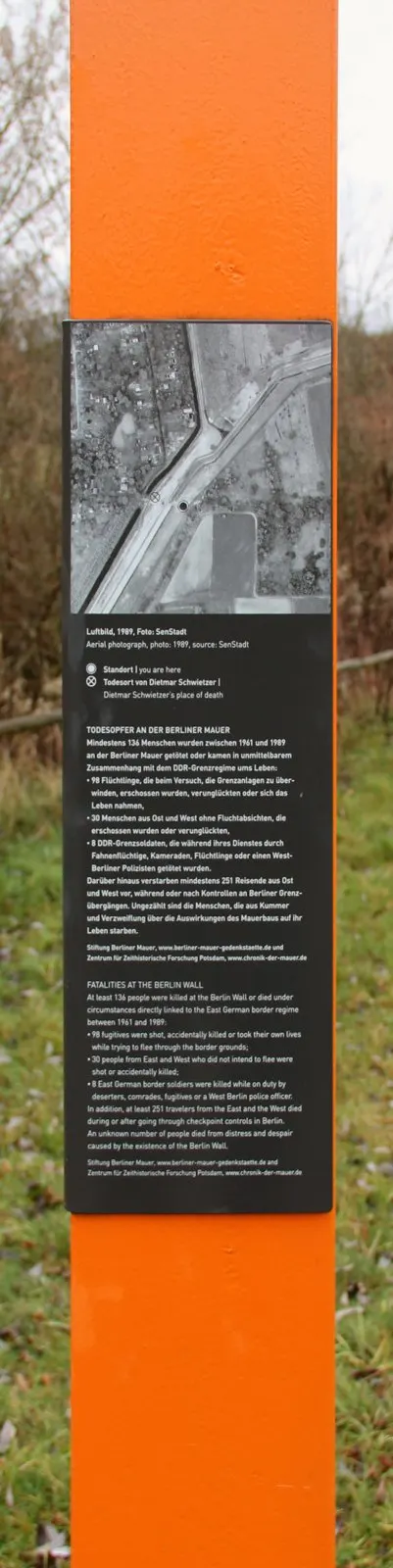
- Panel on the memorial column with a 1989 aerial photograph marking the place where Dietmar Schwietzer died. OTFW, Berlin, CC BY-SA 3.0, Wikimedia Commons.
Cite this page
“Dietmar Schwietzer”, Victims of the Berlin Wall, Berlin Experiences. https://victimsofthewall.com/victims/schwietzer-dietmar/
Map
The pin position is based on the place of death described in source 1. Base map © OpenStreetMap contributors; course of the Wall in 1989 from Geoportal Berlin (dl-de/zero-2.0). Accessed 23 September 2026.