Hildegard Trabant
1927–1964
Hildegard Trabant, a 37-year-old housing administrator from East Berlin, was shot in the back by a border guard on 18 August 1964 on the closed S-Bahn tracks between Schönhauser Allee and Gesundbrunnen, and died an hour later.
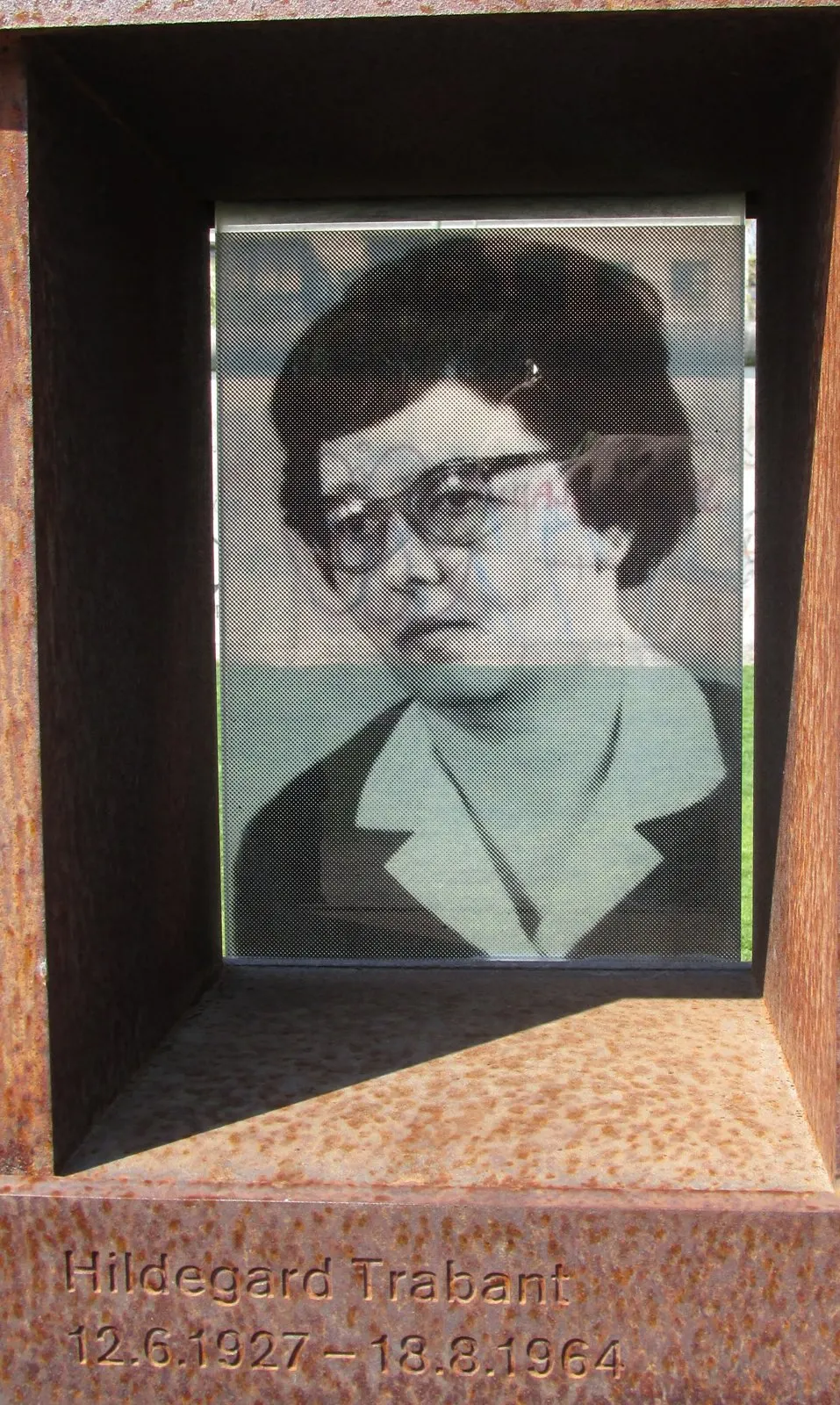

Hildegard Trabant was born Hildegard Pohl in Berlin on 12 June 1927. In 1949, when the GDR came into being, she joined the SED, the ruling party, where, as far as her career is documented, she was valued as an active member. In 1954 she married, and she and her husband lived in Friedrichshain in East Berlin. She held a managerial post in a municipal housing administration; her husband worked for the East German police in the passport and registration division.
What led her to attempt an escape in August 1964 is not known for certain, but the reasons probably lay in her family life. The Stasi learned from her husband's People's Police file that in February 1964 he had been taken to task by his superiors after beating her during a quarrel; one cause of their arguments was that he would not accept her coming home late three times a week because of her voluntary public work.
After the Wall was built, the S-Bahn tracks between Schönhauser Allee and Gesundbrunnen were closed, and the track grounds in Prenzlauer Berg became part of the restricted border area. At around 6:50 p.m. on 18 August 1964, border soldiers noticed a woman hiding behind an elder bush there. When ordered to come out, she ran, but away from the border, not towards it. A guard fired a warning shot and then shot her in the back. She was taken to the People's Police Hospital, where she died an hour later. The guard was promoted and decorated.
The next day, in the presence of senior officers from her husband's People's Police unit, a member of the Stasi told him that she had been shot during an attempted border breach. He had to sign an undertaking to tell no one except his superiors the real cause of death and to speak to others only of a fatal accident. The Stasi kept the circle of those informed small, concealed the place and time, and itself arranged her cremation and urn burial on 23 September at the Frieden-Himmelfahrt Cemetery in Berlin-Niederschönhausen.
Even so, word spread. News of the details of her death set off a discussion at a party members' meeting at the Friedrichshain municipal housing administration, called by the SED district leadership, and when her husband went to the East Berlin public prosecutor's office for a death certificate, he said that the SED district leadership had informed her workplace the day after her death and that rumours had spread, even in their neighbourhood. In West Berlin, however, nobody learned of it at the time.
A criminal investigation began only in October 1990, when the East Berlin file of 1964 was handed over to the judicial authorities of the Federal Republic. The former guard, who had been 20 at the time, long denied being the one who fired; in 1997 he was charged before the youth chamber of the Berlin Regional Court, and he confessed during the main hearing. On 10 June 1998 he was convicted of manslaughter and given a suspended prison sentence of a year and nine months. The court found that when she was shot, Hildegard Trabant had no longer been trying to cross the border and had run into the hinterland only to avoid arrest.


Sources
This profile is a summary written for this site from the biography in source 1, which also gives the full account with archival references. Facts taken from other sources are listed below with what they support.
- Christine Brecht, “Hildegard Trabant”, biography in Chronik der Mauer, Federal Agency for Civic Education, Centre for Contemporary History Potsdam and Deutschlandradio. Accessed 23 September 2026. Read online. The biography from which this profile was written, and the source of the dates and place of death.
- German version of the same biography. Accessed 23 September 2026. Read online.
- Report of GDR Border Regiment 31 (deputy commander and head of the political department) on the attempted border breach with use of firearms, 18 August 1964 (BArch, VA-07/6012, Bl. 93-95), transcript in Chronik der Mauer. Accessed 5 October 2026. Read online. Source for: the time, the elder bush on the closed S-Bahn line, the warning shot and the aimed shot, her death about an hour later and the request to decorate the guard who fired.
- Hans-Hermann Hertle and Maria Nooke (eds.), The Victims at the Berlin Wall, 1961–1989: A Biographical Handbook. Centre for Contemporary History Potsdam and Berlin Wall Foundation, Berlin 2011. The printed handbook from which the online biography is taken.
- Hans-Hermann Hertle and Maria Nooke, “140 Victims at the Berlin Wall, 1961–1989” (list), Centre for Contemporary History Potsdam and Berlin Wall Foundation, August 2017. PDF. Used to cross-check names and dates.
- Hans-Hermann Hertle and Maria Nooke, “The Victims at the Berlin Wall, 1961–1989: Findings of a Research Project”, August 2017. PDF. Source of the classification into escapees, people with no intent to escape, and border soldiers.
Corrections
This profile was corrected on 24 and 28 September and 3 October 2026. Each round of corrections is described in the corrections log:
-
: Court outcomes checked against the German originals
- Corrected the sentence of a year and nine months from “commuted to probation” to “suspended on probation”.
- : All profiles and articles cross-checked against the German originals
- : Every profile checked against all the sources
Further reading
Image credits
- Hildegard Trabant; her photograph in the Window of Remembrance at the Berlin Wall Memorial on Bernauer Straße. Brewer Bob, CC BY-SA 3.0, Wikimedia Commons.
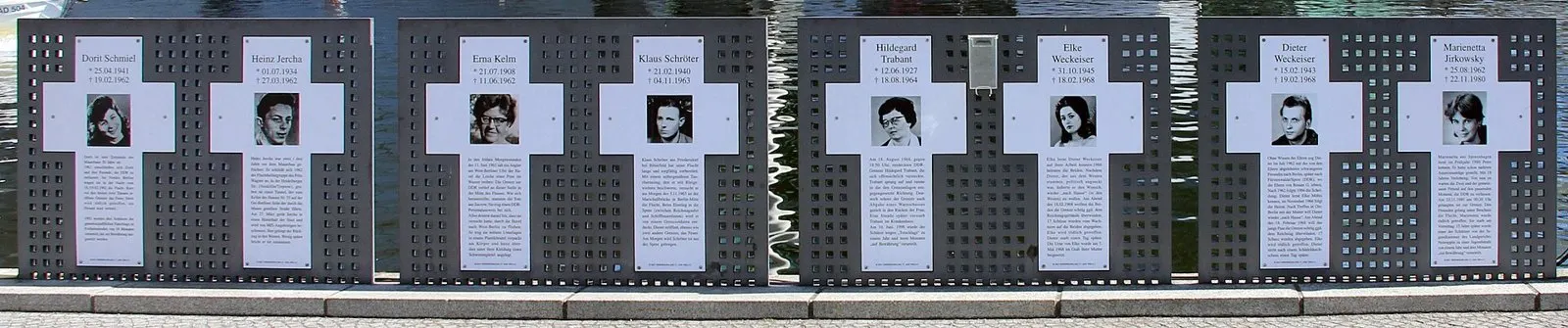
- The 'White Crosses' memorial for victims of the Berlin Wall, with a cross for Hildegard Trabant bearing her photograph and dates. OTFW, Berlin, CC BY-SA 3.0, Wikimedia Commons.
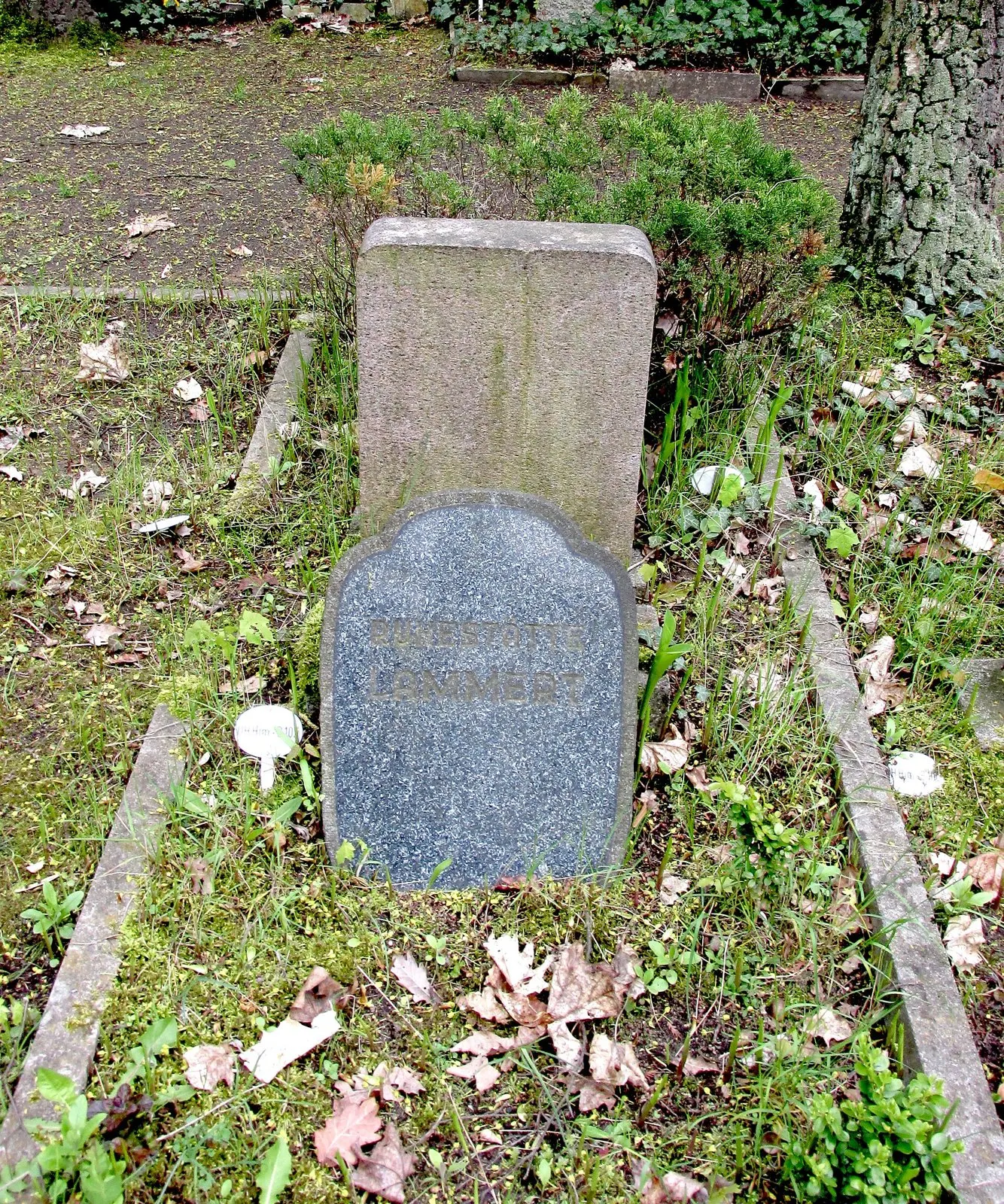
- Hildegard Trabant's grave at the Friedhof Nordend in Berlin-Rosenthal, photographed in 2014. Soerfm (Wikimedia Commons user), Public domain, Wikimedia Commons.
Cite this page
“Hildegard Trabant”, Victims of the Berlin Wall, Berlin Experiences. https://victimsofthewall.com/victims/trabant-hildegard/
Map
The pin position is based on the place of death described in source 1. Base map © OpenStreetMap contributors; course of the Wall in 1989 from Geoportal Berlin (dl-de/zero-2.0). Accessed 23 September 2026.