Heinz Schöneberger
1938–1965
Heinz Schöneberger, a 27-year-old construction worker from West Germany, was shot in the back on 26 December 1965 at the Heinrich-Heine-Strasse crossing while trying to drive two women out of East Germany, and died from loss of blood on West Berlin territory.
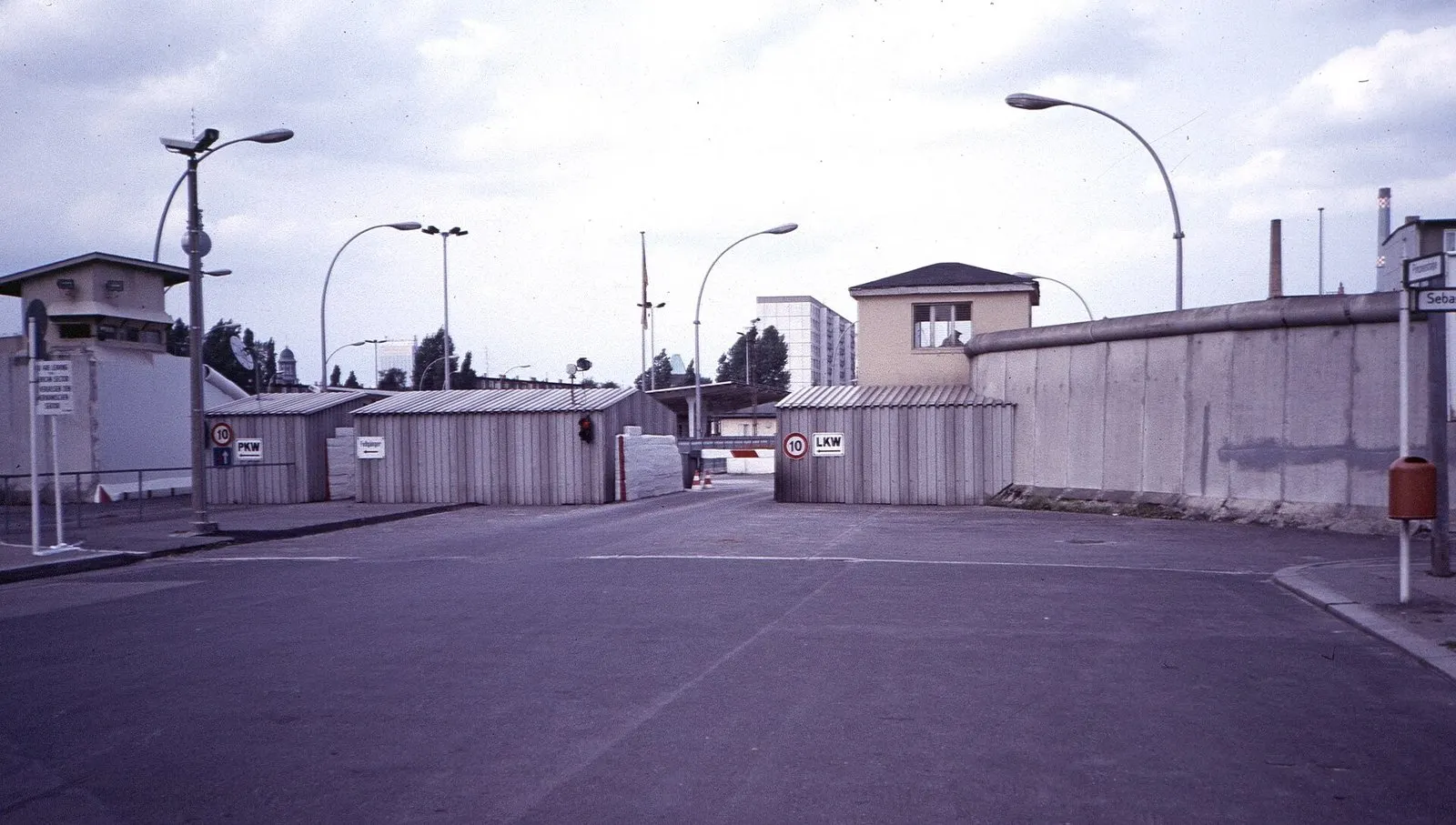

Heinz Schöneberger was born on 7 June 1938 in Wagten, East Prussia. After the Second World War he was forced to leave his homeland; together with his mother and his three brothers he made it to West Germany, where they made their home in the Harz mountains. There he went to school and trained as a construction worker, afterwards getting by with a series of temporary jobs.
He married, and in June 1961 moved with his wife to East Germany, probably to avoid a prison sentence for driving without a licence. He returned to West Germany before the Wall was built, meaning to bring his wife over later. On 17 October 1961 he left the transit route to fetch her from Karl-Marx-Stadt, but was arrested before they could plan an escape. Sentences for leaving and re-entering the country, for "violating the border", and, while he was still in prison, for attempted breakouts and "mutiny" followed one another, and his wife divorced him. He was released to West Germany on 1 August 1964, only to serve two months in Wolfenbüttel prison for driving without a licence.
Afterwards he worked on building sites in West Berlin with his brother Horst. On visits to East Berlin the brothers met Monika P. and Christel R. at a dance hall and began seeing them. The two women were set on leaving East Germany, and the brothers wanted to help. They planned to use a Ford Taunus 17 M, which had bench seats at the front as well as the back: Monika P. was to hide inside the backrest of the rear seat and Christel R. under the front bench. If they were discovered at the border, they agreed, they would put their foot down and break through.
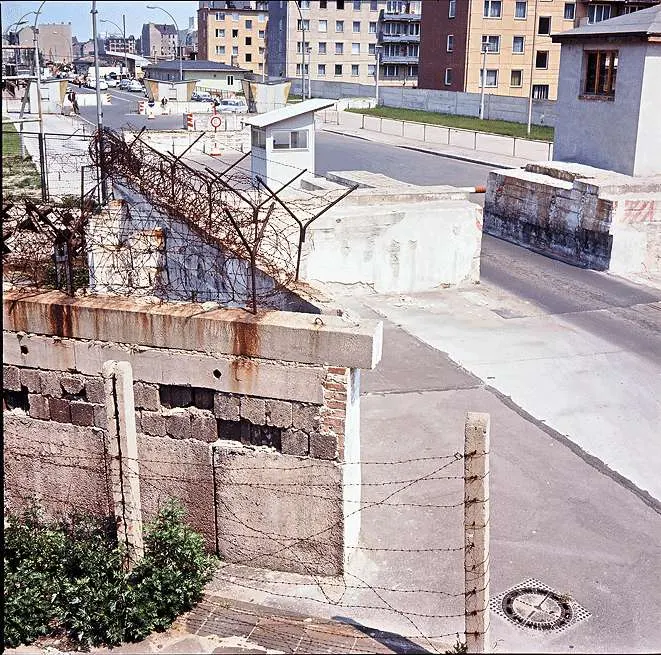
At around half past midnight on 26 December 1965 they reached the Heinrich-Heine-Strasse crossing. The brothers were told to step out, and a soldier found Monika P. hidden in the backrest of the rear seat. Heinz Schöneberger leapt behind the wheel, locked the doors and drove towards the border through the zigzag of concrete barriers, but could not go faster than 40 kilometres an hour, and the car stopped at the closed final barrier. Shots from the tower hit the driver's door, injuring only his calf. He ran for the border, bent low. A second guard fired at him from behind, and five metres from the line a bullet struck him in the back and severed his carotid artery. He reached West Berlin territory but died soon afterwards from loss of blood. He was buried in Dortmund.
West Berlin police, customs officers and passers-by had witnessed the shooting, and protests continued at the crossing over the following days. Horst Schöneberger was sentenced to twelve years and freed to the West six and a half years later. Monika P. received two years and six months and Christel R. two years; both later moved to the West.
A West Berlin manslaughter investigation was discontinued in 1967 because the soldiers who had fired could not be identified. Reopened in the early 1990s, the case came to trial, but on 28 February 1997 the Berlin Regional Court acquitted all the defendants, finding the charges not proven with sufficient certainty.

Read more
Also died on the sector border between Berlin-Kreuzberg and Berlin-Mitte
- Klaus Brueske 18 April 1962
- Reinhold Huhn 18 June 1962
- Siegfried Noffke 28 June 1962
- Peter Fechter 17 August 1962
- Paul Schultz 25 December 1963
- Johannes Lange 9 April 1969
- Burkhard Niering 5 January 1974
- Herbert Halli 3 April 1975
Sources
This profile is a summary written for this site. Every fact in it is taken from source 1, which also gives the full account with archival references.
- Martin Ahrends/Udo Baron, “Heinz Schöneberger”, biography in Chronik der Mauer, Federal Agency for Civic Education, Centre for Contemporary History Potsdam and Deutschlandradio. Accessed 23 September 2026. Read online. Basis for every fact in this profile, including the dates and place of death.
- German version of the same biography. Accessed 23 September 2026. Read online.
- Hans-Hermann Hertle and Maria Nooke (eds.), The Victims at the Berlin Wall, 1961–1989: A Biographical Handbook. Centre for Contemporary History Potsdam and Berlin Wall Foundation, Berlin 2011. The printed handbook from which the online biography is taken.
- Hans-Hermann Hertle and Maria Nooke, “140 Victims at the Berlin Wall, 1961–1989” (list), Centre for Contemporary History Potsdam and Berlin Wall Foundation, August 2017. PDF. Used to cross-check names and dates.
- Hans-Hermann Hertle and Maria Nooke, “The Victims at the Berlin Wall, 1961–1989: Findings of a Research Project”, August 2017. PDF. Source of the classification into escapees, people with no intent to escape, and border soldiers.
Further reading
Image credits
- The Heinrich-Heine-Straße border crossing, where Heinz Schöneberger was shot on 26 December 1965; photographed on 3 August 1987.. Roehrensee, CC BY-SA 3.0, Wikimedia Commons.
- The Heinrich-Heine-Straße border crossing on 6 June 1965, the year Heinz Schöneberger was shot there (photo: Willy Pragher).. Willy Pragher, CC BY 3.0, Wikimedia Commons.
Cite this page
“Heinz Schöneberger”, Victims of the Berlin Wall, Berlin Experiences. https://victimsofthewall.com/victims/schoeneberger-heinz/
Map
The pin position is based on the place of death described in source 1. Base map © OpenStreetMap contributors; course of the Wall in 1989 from Geoportal Berlin (dl-de/zero-2.0). Accessed 23 September 2026.