Karl-Heinz Kube
1949–1966
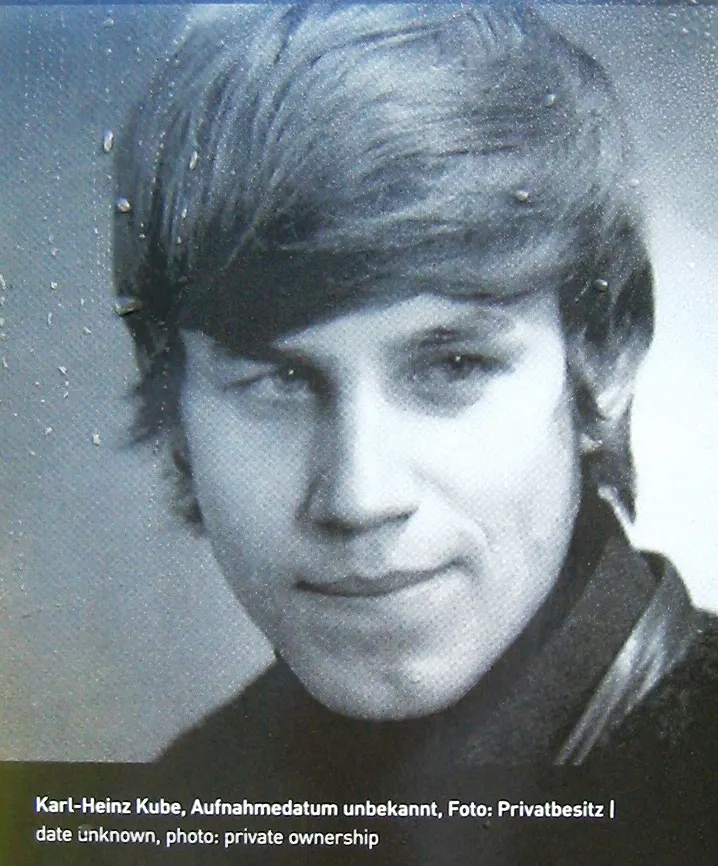
Karl-Heinz Kube, a 17-year-old from Ruhlsdorf near Teltow, was shot dead on 16 December 1966 in the border strip at Kleinmachnow, near Teltow harbour, after he and a friend had already given up their escape attempt.
.jpg)
Karl-Heinz Kube was born on 10 April 1949 and grew up with four siblings in Ruhlsdorf near Teltow, south of Berlin. He went to school in Stahnsdorf and from November 1964 worked at the state-owned industrial plant in Ludwigsfelde, from April 1966 as an electric trolley driver. His friends called him "Kalle". Like them he loved western rock music, above all the Beatles, whom the East German authorities at that time scorned as a "layabout band" and whose music was therefore banned.
According to Stasi records he discouraged young people from joining the FDJ and objected to collections for the Vietcong. His defiant attitude brought him into conflict with the SED party leadership at his workplace, and for political reasons he was even threatened with being sent to a Jugendwerkhof, a kind of prison for young people. In the autumn of 1966, when he was 17, he and his friend Detlev S., who was 18, began to plan an escape to the West. Detlev wanted to become a ship's cook, but his applications were turned down, probably because his father and brother lived in the West. They considered swimming the Teltow Canal, ramming the border in a stolen car and even a glider, before settling on Kleinmachnow.
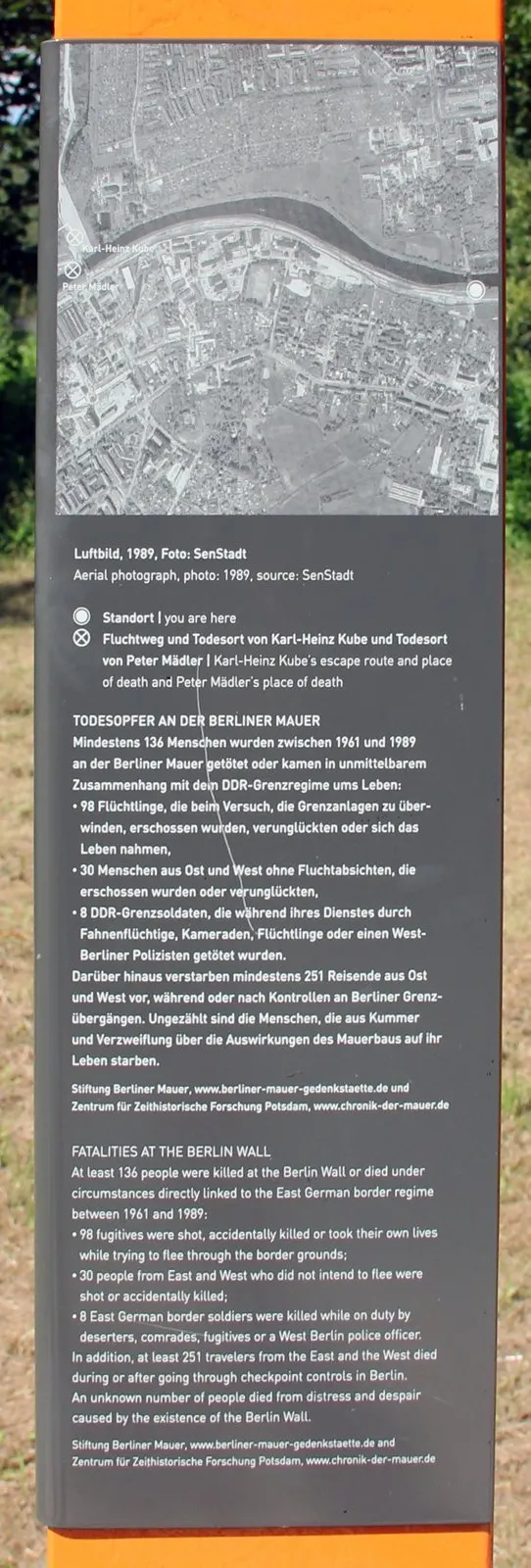
On the evening of 16 December 1966 the two rode a scooter from Ruhlsdorf to the border at Erlenweg in Kleinmachnow, near Teltow harbour, hoping that many guards would already be on Christmas leave. With wire cutters Karl-Heinz had obtained in Potsdam, they got past the first wall and the wire obstacles into the death strip. Around 9.45 p.m. they reached a trench obstacle; only an iron mesh fence about two to two and a half metres high now stood between them and West Berlin. At that moment border soldiers spotted them and opened fire.
The two gave up their attempt and took cover in a trench, hoping to get back, but as they ran from one group of guards they came into the line of fire of a second pair of guards, which opened continuous fire; the two ran back and forth in the trench several times to escape the shots. Karl-Heinz was struck by two bullets, in the head and chest, and fatally wounded. Four soldiers had fired 40 shots. Detlev S., unhurt, was arrested and not told for weeks that his friend had died. In a handwritten account he wrote in prison, he stated that two guards had carried Karl-Heinz, who had lost a great deal of blood and was unconscious, to a wall about 1.5 metres high and thrown him down from it. On 2 March 1967 the Potsdam-Stadt district court sentenced him to a year and eight months in prison.
Shortly before Christmas his parents, Helmut and Martha Kube, were told at the Kleinmachnow police station that their son had died in a border breach. His father was made to sign his agreement to cremation. They were not allowed to see him; his urn arrived by post. The uncertainty about how he had died, and whether he had suffered, never left his mother. She was 54 when she died, in December 1983, shortly before the anniversary of his death. The Stasi tried to stop his friends from hanging his picture in the Ruhlsdorf youth club and attending his funeral together.
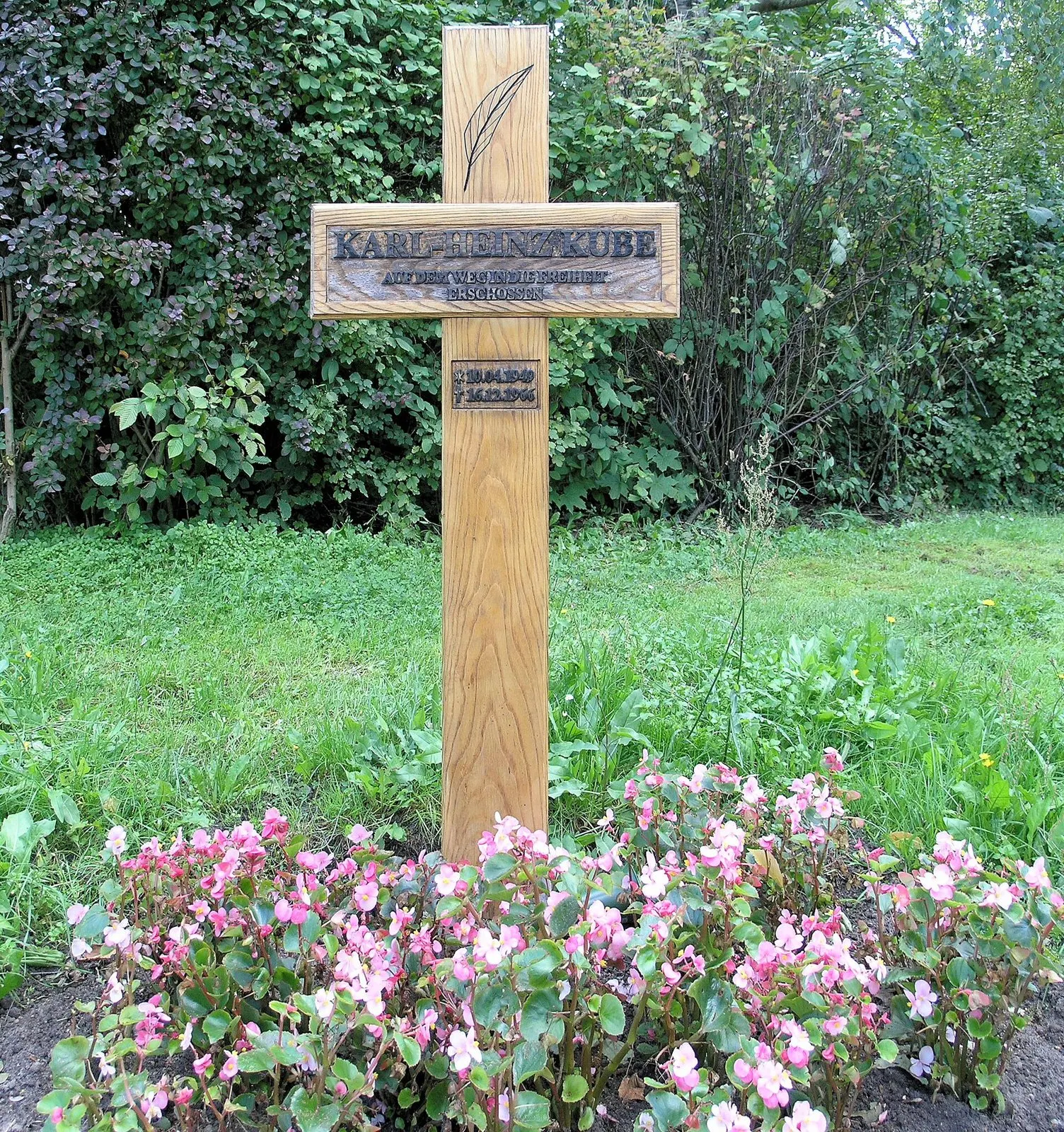
In January 1990 his father wrote to Eberhard Diepgen, then mayor of Berlin, that he would never forget the sentence with which he had been told of his son's death. After a year of fruitless inquiries he followed advice to file a criminal complaint against persons unknown, and in March 1993 the four guards were charged with joint manslaughter and attempted manslaughter. A youth panel of the Potsdam District Court (Bezirksgericht) acquitted them, finding among other things that it could not be established which of them had fired the fatal shots. His younger sister said the acquittal had not settled their guilt: they claimed they had not aimed, she said, and yet they had hit. Today a plain wooden cross on the edge of Berlepschstrasse in Berlin-Zehlendorf remembers him.
_Karl-Heinz_Kube.jpg)
_Kube_M%C3%A4dler.jpg)
_Todesopfer_an_der_Berliner_Mauer.jpg)
Read more
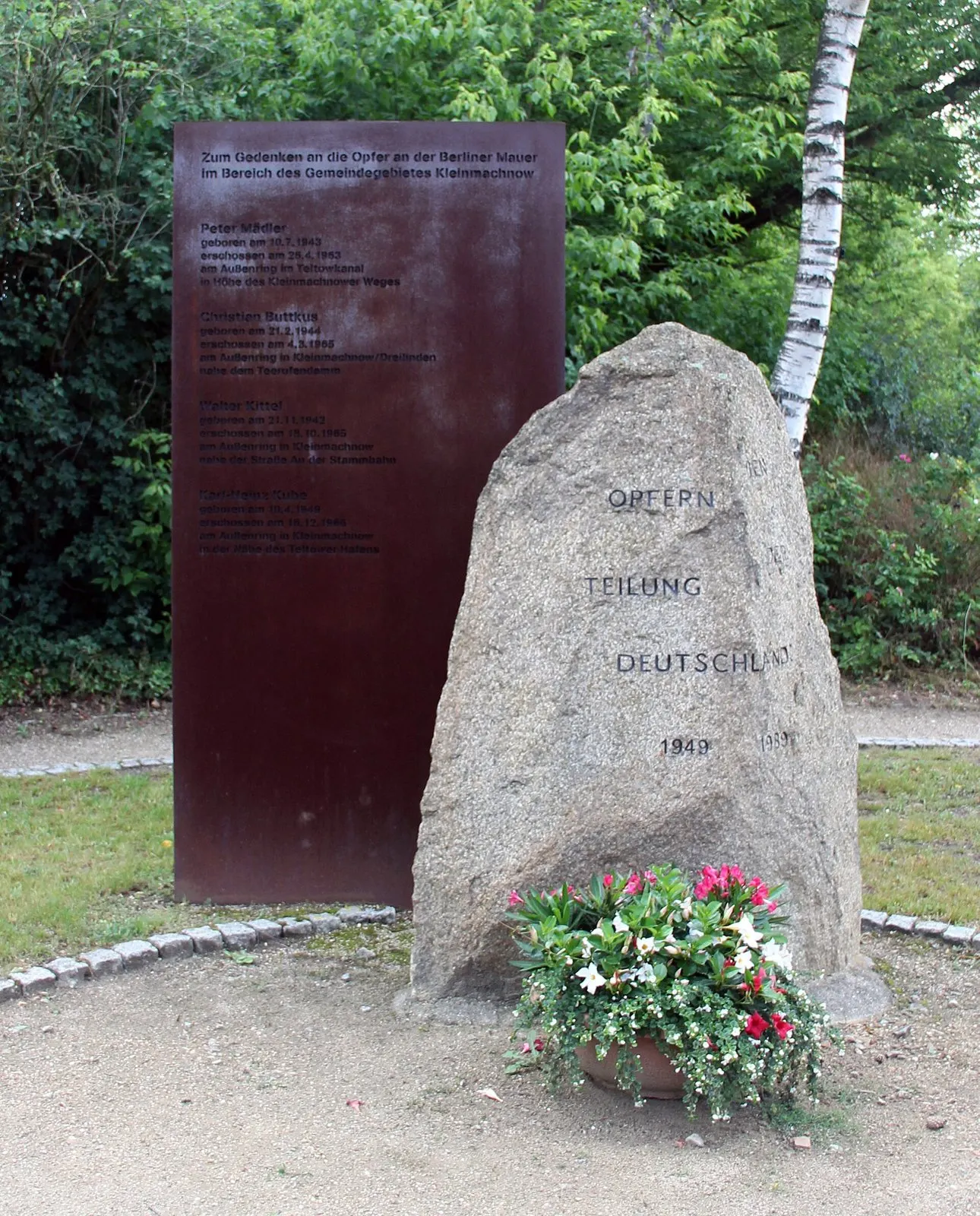
Also died on the outer ring between Berlin-Zehlendorf and Kleinmachnow
- Peter Mädler 26 April 1963
- Christian Buttkus 4 March 1965
- Walter Kittel 18 October 1965
Sources
This profile is a summary written for this site. Every fact in it is taken from source 1, which also gives the full account with archival references.
- Hans-Hermann Hertle, “Karl-Heinz Kube”, biography in Chronik der Mauer, Federal Agency for Civic Education, Centre for Contemporary History Potsdam and Deutschlandradio. Accessed 23 September 2026. Read online. Basis for every fact in this profile, including the dates and place of death.
- German version of the same biography. Accessed 23 September 2026. Read online.
- Hans-Hermann Hertle and Maria Nooke (eds.), The Victims at the Berlin Wall, 1961–1989: A Biographical Handbook. Centre for Contemporary History Potsdam and Berlin Wall Foundation, Berlin 2011. The printed handbook from which the online biography is taken.
- Hans-Hermann Hertle and Maria Nooke, “140 Victims at the Berlin Wall, 1961–1989” (list), Centre for Contemporary History Potsdam and Berlin Wall Foundation, August 2017. PDF. Used to cross-check names and dates.
- Hans-Hermann Hertle and Maria Nooke, “The Victims at the Berlin Wall, 1961–1989: Findings of a Research Project”, August 2017. PDF. Source of the classification into escapees, people with no intent to escape, and border soldiers.
Further reading
Image credits
- Karl-Heinz Kube (photo: private ownership), photographed from a memorial column on the Berlin Wall Trail near Kleinmachnow. Assenmacher, CC BY-SA 3.0, Wikimedia Commons.
- Memorial cross for Karl-Heinz Kube on Berlepschstraße in Berlin-Zehlendorf, photographed in 2010. OTFW, Berlin, CC BY-SA 3.0, Wikimedia Commons.
- Panel at Zehlendorfer Straße in Teltow with a 1989 aerial photograph marking Karl-Heinz Kube's escape route and place of death and Peter Mädler's place of death, photographed in 2017. OTFW, Berlin, CC BY-SA 3.0, Wikimedia Commons.
- Memorial stone for the victims of the division of Germany and a steel plaque in memory of the victims of the Berlin Wall in Kleinmachnow, which names Karl-Heinz Kube, photographed in 2019. OTFW, Berlin, CC BY-SA 3.0, Wikimedia Commons.
Cite this page
“Karl-Heinz Kube”, Victims of the Berlin Wall, Berlin Experiences. https://victimsofthewall.com/victims/kube-karl-heinz/
Map
The pin position is based on the place of death described in source 1. Base map © OpenStreetMap contributors; course of the Wall in 1989 from Geoportal Berlin (dl-de/zero-2.0). Accessed 23 September 2026.