Max Sahmland
1929–1967
Max Sahmland, a 37-year-old Berlin-born former blacksmith and farm worker, was shot by border guards while fleeing across the Teltow Canal to West Berlin on 27 January 1967 and sank in the water.
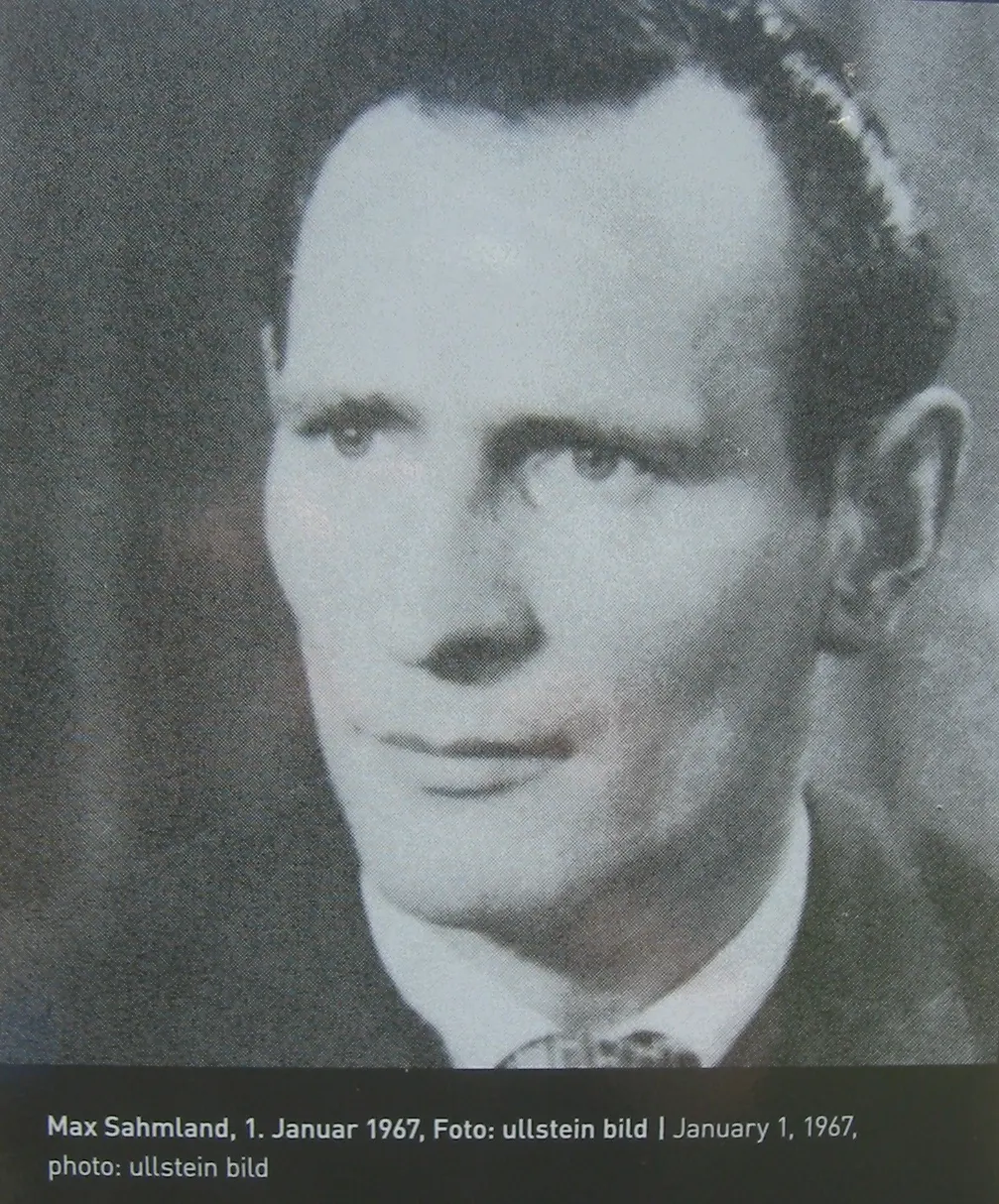

Max Sahmland was born in Berlin on 28 March 1929 and was 16 when the war ended. The years that followed seem not to have been easy for him. After leaving school he worked on the land and later as a blacksmith at the heavy equipment construction company in Wildau. He was married and had two children.
According to a West Berlin police report, he moved to West Berlin in January 1961, leaving his wife and children behind, but returned to East Germany a few months later. Little is known about his reasons, or about why he came back; he reportedly later told the People's Police it was because of problems in his marriage. The marriage broke up. Alcohol repeatedly brought him into conflict with the law. In 1964 he had to serve an 18-month prison sentence for culpably causing a traffic accident, and in early January 1967 the district court in Königs Wusterhausen gave him six months for assault, followed by a stay in a detoxification centre. He did not want to go back to prison and decided to escape to West Berlin with his fiancée, who had a cousin there; he himself had a sister in West Germany.
Two earlier attempts had already failed. The day before the next try, the couple told a friend of their plans, and she chose on the spot to come with them. Shortly before midnight on 26 January 1967, having been drinking, the three set off, cycled to Zeuthen station and took the S-Bahn to Adlershof. From there they walked to a stretch of the border that Max Sahmland knew from his earlier work at a sewage treatment plant. He left the two women in a trench a few metres from the first fence, told his fiancée to be brave, and crawled ahead to cut a gap with a wire-cutter. When bursts of submachine-gun fire startled them, the women ran back and reached home without being noticed.
At about 2:30 a.m. he set off an alarm while trying to get over the signal fence, and guards in the observation tower at the Wredebrücke opened fire. Although already hit, he got under the barrier, reached the bank of the Teltow Canal and began to swim. The guards kept firing even after he had reached West Berlin territory; he was struck by several bullets, one of them in the right lung. Two workers from a cement asbestos plant on the western bank ran to help him, but had to take cover because the shooting continued, and eventually he sank into the canal.
The West Berlin water police recovered his body from the canal on 8 March 1967, six weeks later; he was identified by the identity card he was carrying. In February 2000 the Berlin Regional Court acquitted the man suspected of having shot him, because it could not disprove his claim that he had deliberately aimed a few metres wide.
His fiancée was arrested on 28 January 1967 and sentenced to two years and eight months in prison; she served twenty months in the Stasi prison in Potsdam and in Hoheneck women's prison. Her friend received a year and seven months. Max Sahmland's mother, who lived in East Berlin, was apparently not told that his body could be brought to East Berlin, as her letters to her sister suggest, and he was buried on 5 April 1967 in the Park Cemetery in Neukölln, West Berlin. To keep the 70-year-old woman from attending her son's funeral, the Stasi barred her from travelling until the end of April 1967.
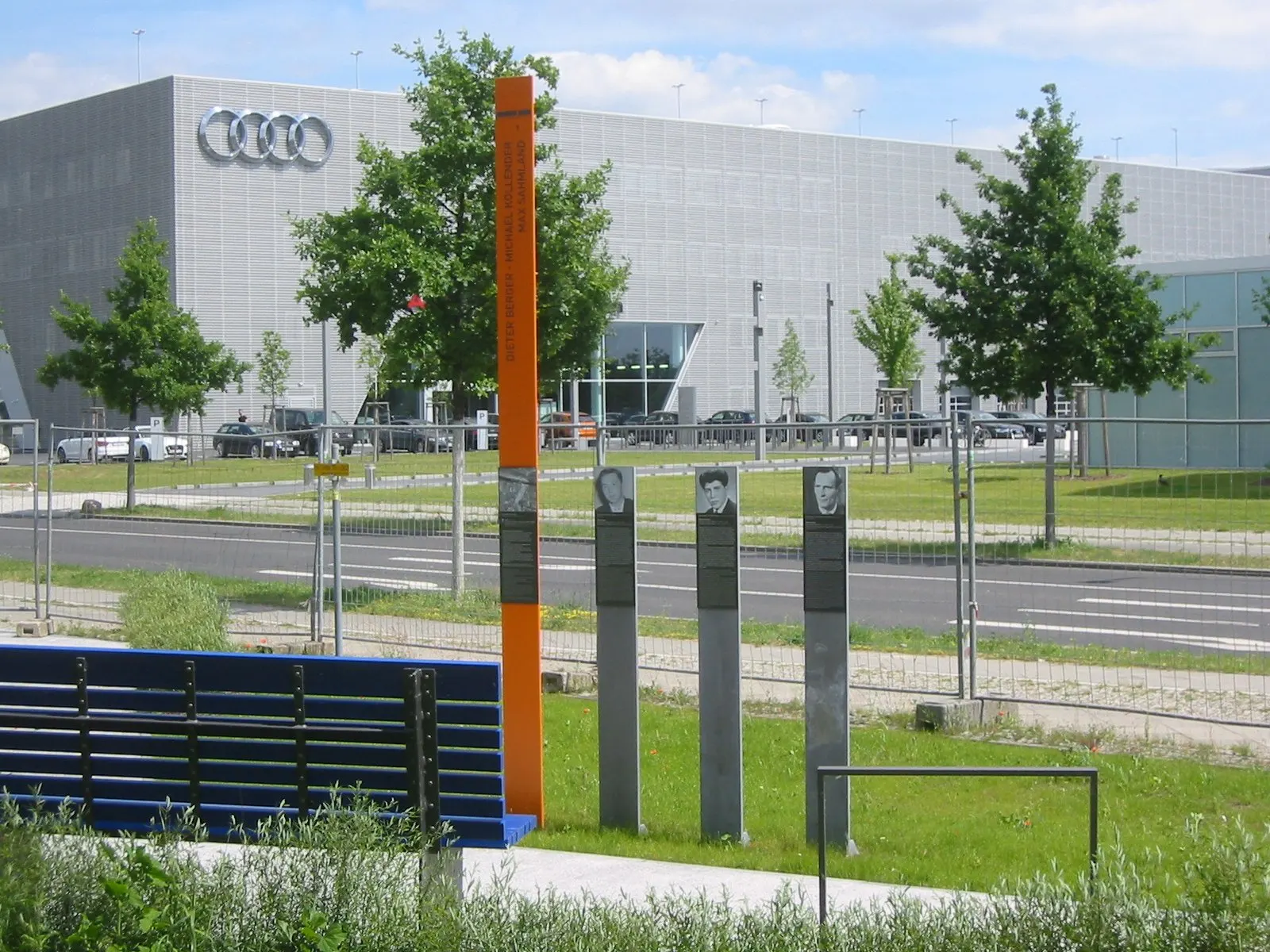

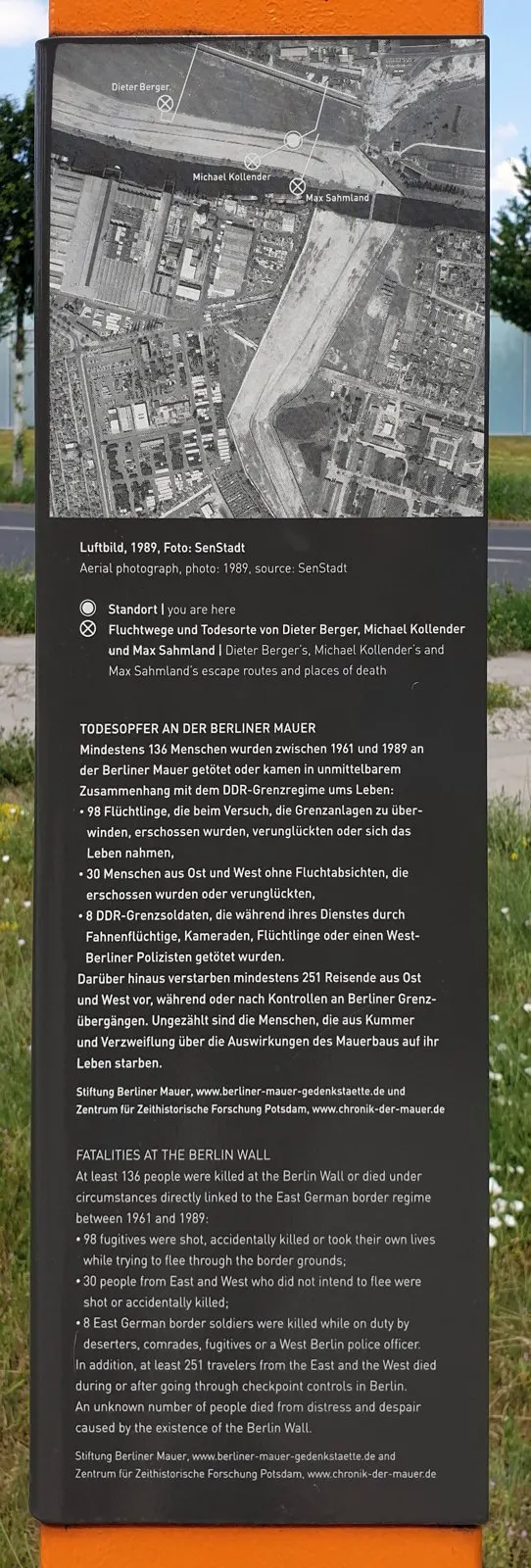
_Berger_Kollender_Sahmland.jpg)
Also died on the sector border between Berlin-Neukölln and Berlin-Treptow
- Georg Feldhahn 19 December 1961
- Heinz Jercha 27 March 1962
- Wolfgang Glöde 11 June 1962
- Horst Kutscher 15 January 1963
- Siegfried Widera 8 September 1963
- Dieter Berger 13 December 1963
- Walter Hayn 27 February 1964
- Hans-Joachim Wolf 26 November 1964
- Erich Kühn 3 December 1965
- Jörg Hartmann 14 March 1966
- Lothar Schleusener 14 March 1966
- Michael Kollender 25 April 1966
- Gerald Thiem 7 August 1970
- Christian Peter Friese 25 December 1970
- Werner Kühl 24 July 1971
- Johannes Sprenger 10 May 1974
- Manfred Mäder 21 November 1986
- René Gross 21 November 1986
- Lutz Schmidt 12 February 1987
- Chris Gueffroy 5 February 1989
Sources
This profile is a summary written for this site. Every fact in it is taken from source 1, which also gives the full account with archival references.
- Martin Ahrends/Udo Baron, “Max Sahmland”, biography in Chronik der Mauer, Federal Agency for Civic Education, Centre for Contemporary History Potsdam and Deutschlandradio. Accessed 23 September 2026. Read online. Basis for every fact in this profile, including the dates and place of death.
- German version of the same biography. Accessed 23 September 2026. Read online.
- Hans-Hermann Hertle and Maria Nooke (eds.), The Victims at the Berlin Wall, 1961–1989: A Biographical Handbook. Centre for Contemporary History Potsdam and Berlin Wall Foundation, Berlin 2011. The printed handbook from which the online biography is taken.
- Hans-Hermann Hertle and Maria Nooke, “140 Victims at the Berlin Wall, 1961–1989” (list), Centre for Contemporary History Potsdam and Berlin Wall Foundation, August 2017. PDF. Used to cross-check names and dates.
- Hans-Hermann Hertle and Maria Nooke, “The Victims at the Berlin Wall, 1961–1989: Findings of a Research Project”, August 2017. PDF. Source of the classification into escapees, people with no intent to escape, and border soldiers.
Further reading
Image credits
- Max Sahmland on 1 January 1967 (photo: ullstein bild), photographed from his memorial stele at Ernst-Ruska-Ufer in Berlin-Adlershof. Assenmacher, CC BY-SA 3.0, Wikimedia Commons.
- Memorial column and steles for Max Sahmland, Michael Kollender and Dieter Berger at Ernst-Ruska-Ufer in Berlin-Adlershof, photographed in 2013. Assenmacher, CC BY-SA 3.0, Wikimedia Commons.
- Panel at the Adlershof memorial with a 1989 aerial photograph marking the escape routes and places of death of Dieter Berger, Michael Kollender and Max Sahmland, photographed in 2019. OTFW, Berlin, CC BY-SA 3.0, Wikimedia Commons.
Cite this page
“Max Sahmland”, Victims of the Berlin Wall, Berlin Experiences. https://victimsofthewall.com/victims/sahmland-max/
Map
The pin position is based on the place of death described in source 1. Base map © OpenStreetMap contributors; course of the Wall in 1989 from Geoportal Berlin (dl-de/zero-2.0). Accessed 23 September 2026.