Dieter Berger
1939–1963
Dieter Berger, a 24-year-old bricklayer and young father from Glienicke, entered the border area on the Teltow Canal in Johannisthal on 13 December 1963, apparently after drinking, and was shot by border guards after he had raised his hands.
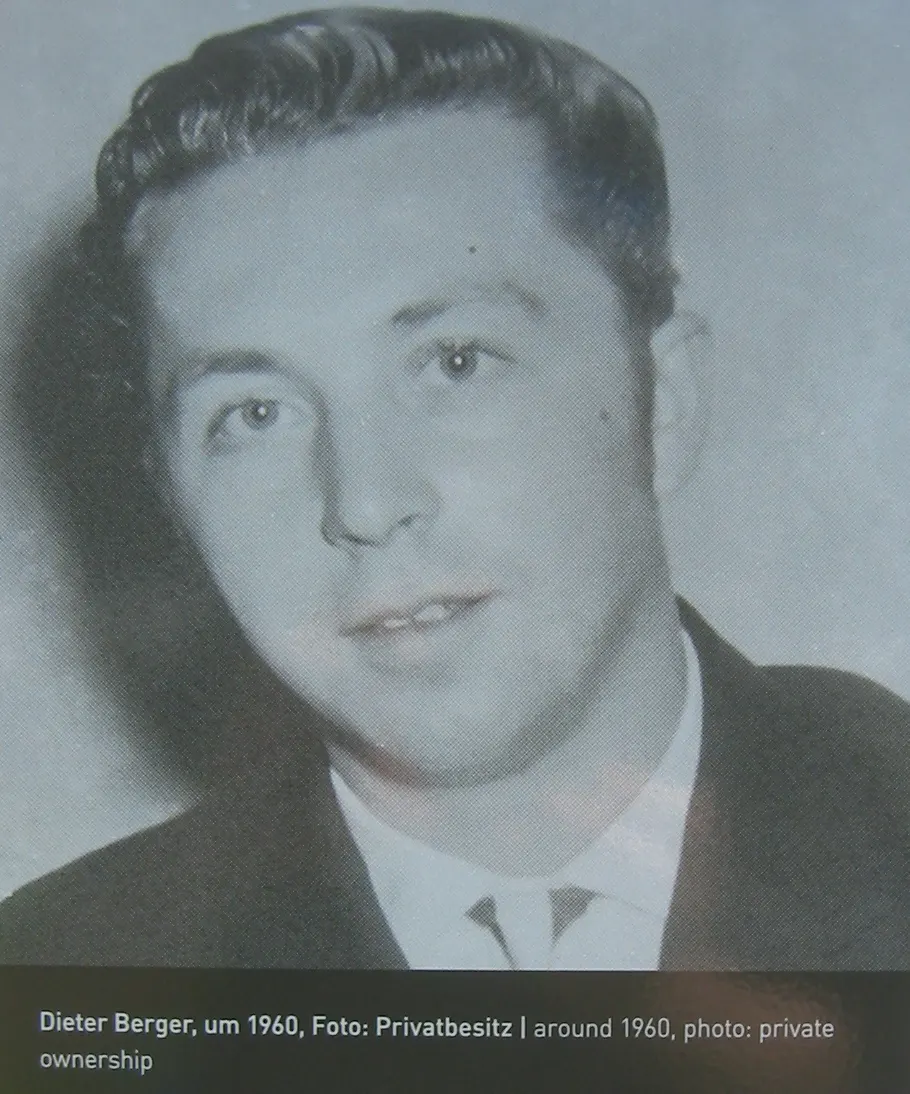

Dieter Berger was born on 27 October 1939 in Polkau, Silesia. His father died as a soldier in the Second World War before he could know him, and he grew up with his mother, his stepfather and a younger half-brother. After the war the family came from Silesia to the Soviet occupation zone, and from 1947 they lived in Glienicke, a northern suburb of Berlin. He went to school there until 1955 and then trained as a bricklayer at a state-run company in East Berlin.
In 1962 he married Gerda, five years his junior, who had also come from Silesia to Glienicke as a child. The couple lived in a small house with a garden close to both sets of parents, and they had a little daughter. His widow later said that he had no interest in politics and loved motorcycles, and that they had never talked about leaving. Inquiries made by the Stasi after his death found that the local People's Police officer regarded him as a citizen who was not opposed to the East German system and had always been friendly and courteous; the only remark against him was that he played western pop music loudly at home. In December 1963 he was working as a bricklayer on an Academy of Sciences building site in Adlershof.
Friday 13 December 1963 began as an ordinary working day. According to Stasi files, he is said to have got drunk with a colleague during his lunch break and left the site in the afternoon, presumably walking to the neighbouring district of Johannisthal. At around 3 p.m. two guards in a trench inside the border strip saw him approach the bank of the Teltow Canal and took him for an escapee. Why he was there has never been conclusively explained. Border troop and Stasi files stated that he was trying to cross the border grounds, but his family believed he had wandered into the area, drunk and disoriented; his mother wrote to relatives in West Germany at the time that he had had neither the intention nor any reason to leave them and, since he was said to have been drinking, must surely have lost his bearings. A careful look at the facts, the biography notes, offers little to suggest he was trying to escape.
According to the guards, he ignored their order to stop, tried to climb the fence and insulted them; one of them later told a court that his behaviour had unsettled them. After warning shots he came down and raised his hands as instructed. Workers at the West Berlin Eternit plant across the canal, who also took it for an escape attempt ending in an arrest, then saw him move a little way away from the border fortifications and be shot down by the two guards. East German reports gave a different account, claiming he had tried to escape into the hinterland. He died on the way to the People's Police Hospital.
Because he carried no papers, it took a number of days to identify him. On 16 December his wife had to identify his body at the Charité forensic institute. The autopsy found that a bullet to the thigh had brought him down and that the fatal shot struck him while he was already lying on the ground. It also recorded that he was heavily intoxicated.
After reunification two former border soldiers were charged. The guard who had fired the fatal shot was unable to stand trial after suffering two strokes, and his guard leader was acquitted on 1 November 1995 because the court could not establish that he had fired or ordered the shooting.
_Berger_Schmidt.jpg)

_Berger_Kollender_Sahmland.jpg)
Also died on the sector border between Berlin-Neukölln and Berlin-Treptow
- Georg Feldhahn 19 December 1961
- Heinz Jercha 27 March 1962
- Wolfgang Glöde 11 June 1962
- Horst Kutscher 15 January 1963
- Siegfried Widera 8 September 1963
- Walter Hayn 27 February 1964
- Hans-Joachim Wolf 26 November 1964
- Erich Kühn 3 December 1965
- Jörg Hartmann 14 March 1966
- Lothar Schleusener 14 March 1966
- Michael Kollender 25 April 1966
- Max Sahmland 27 January 1967
- Gerald Thiem 7 August 1970
- Christian Peter Friese 25 December 1970
- Werner Kühl 24 July 1971
- Johannes Sprenger 10 May 1974
- Manfred Mäder 21 November 1986
- René Gross 21 November 1986
- Lutz Schmidt 12 February 1987
- Chris Gueffroy 5 February 1989
Sources
This profile is a summary written for this site. Every fact in it is taken from source 1, which also gives the full account with archival references.
- Christine Brecht, “Dieter Berger”, biography in Chronik der Mauer, Federal Agency for Civic Education, Centre for Contemporary History Potsdam and Deutschlandradio. Accessed 23 September 2026. Read online. Basis for every fact in this profile, including the dates and place of death.
- German version of the same biography. Accessed 23 September 2026. Read online.
- Hans-Hermann Hertle and Maria Nooke (eds.), The Victims at the Berlin Wall, 1961–1989: A Biographical Handbook. Centre for Contemporary History Potsdam and Berlin Wall Foundation, Berlin 2011. The printed handbook from which the online biography is taken.
- Hans-Hermann Hertle and Maria Nooke, “140 Victims at the Berlin Wall, 1961–1989” (list), Centre for Contemporary History Potsdam and Berlin Wall Foundation, August 2017. PDF. Used to cross-check names and dates.
- Hans-Hermann Hertle and Maria Nooke, “The Victims at the Berlin Wall, 1961–1989: Findings of a Research Project”, August 2017. PDF. Source of the classification into escapees, people with no intent to escape, and border soldiers.
Further reading
Image credits
- Dieter Berger, around 1960; photograph on his memorial stele on the Ernst-Ruska-Ufer in Berlin-Adlershof. Assenmacher, CC BY-SA 3.0, Wikimedia Commons.
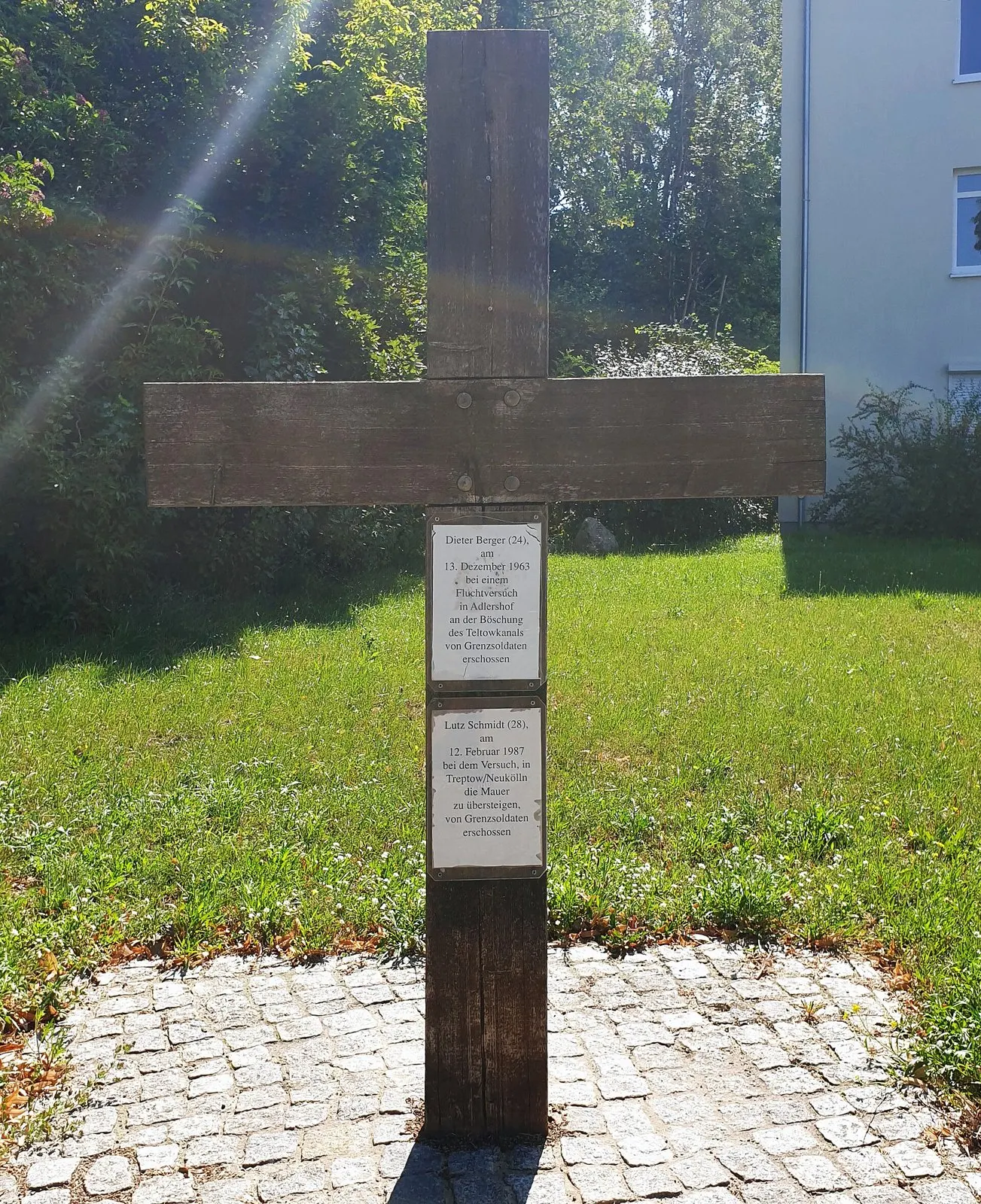
- Wooden memorial cross for Dieter Berger and Lutz Schmidt at Neudecker Weg 7 in Berlin-Rudow, photographed in 2024. OTFW, Berlin, CC BY-SA 3.0, Wikimedia Commons.
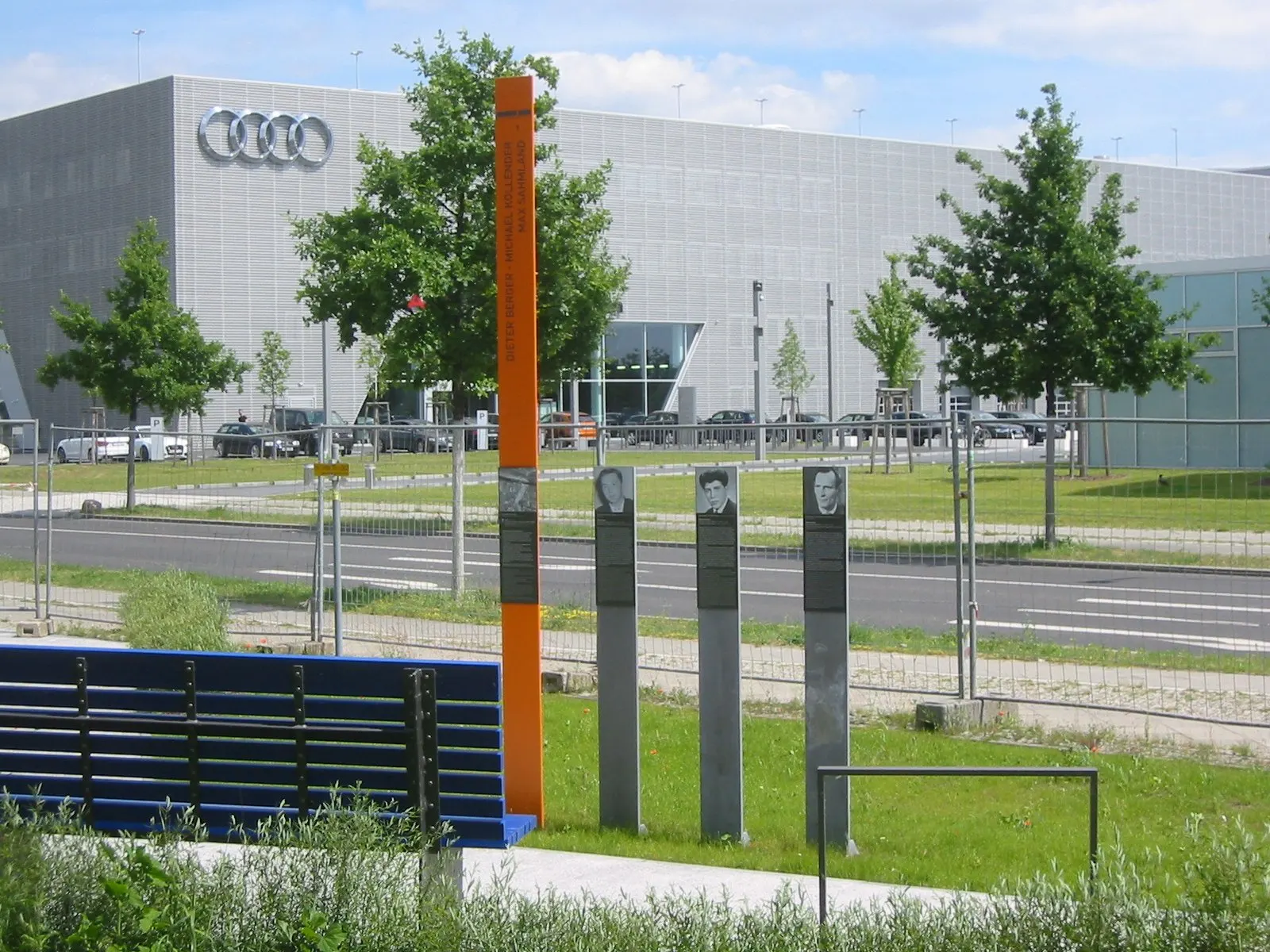
- Memorial steles for Max Sahmland, Michael Kollender and Dieter Berger on the Ernst-Ruska-Ufer in Berlin-Adlershof, photographed in 2013. Assenmacher, CC BY-SA 3.0, Wikimedia Commons.
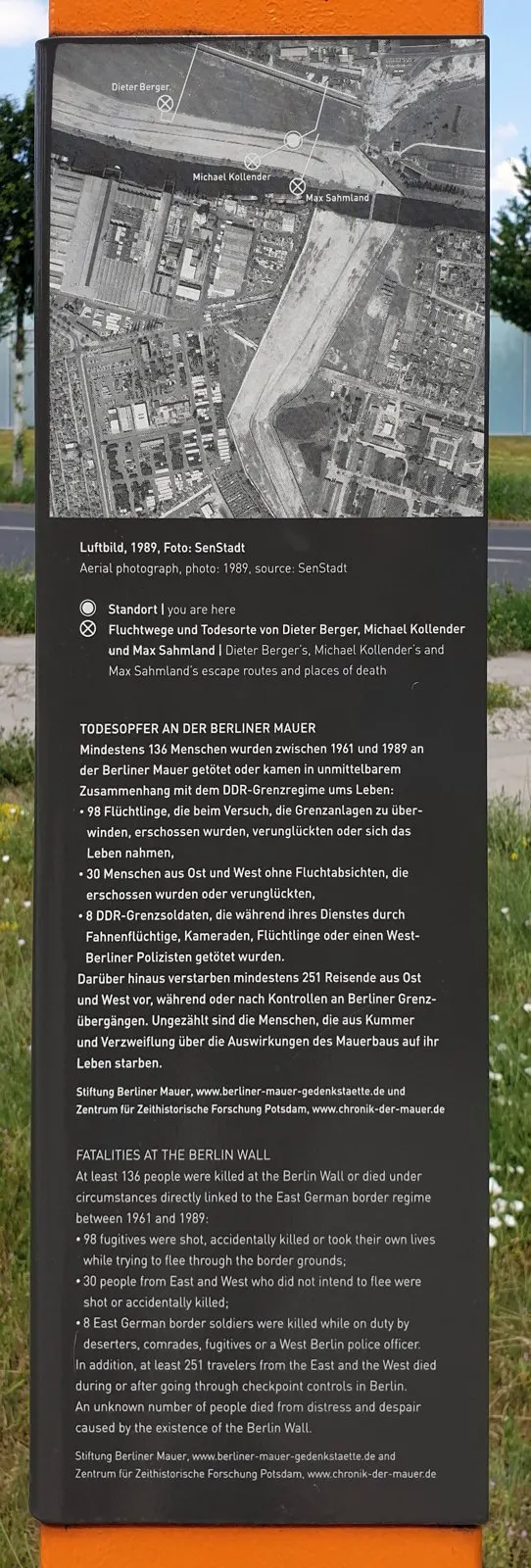
- Map panel in Berlin-Adlershof marking the escape routes and places of death of Dieter Berger, Michael Kollender and Max Sahmland. OTFW, Berlin, CC BY-SA 3.0, Wikimedia Commons.
Cite this page
“Dieter Berger”, Victims of the Berlin Wall, Berlin Experiences. https://victimsofthewall.com/victims/berger-dieter/
Map
The pin position is based on the place of death described in source 1. Base map © OpenStreetMap contributors; course of the Wall in 1989 from Geoportal Berlin (dl-de/zero-2.0). Accessed 23 September 2026.